The Best Water Filtration and Softener Systems for Home
Hard water stains and chlorine odors? Our research-based guide compares the top whole-house filters and softeners, including the iSpring WGB32B and Aquasure Harmony Series, to help you choose the right system for your home.
 By Amara Okafor
Updated November 5, 2026
Hard water stains, chlorine odors, and sediment clogging your appliances are common frustrations for homeowners. Choosing the right system depends on understanding your water’s specific issues, the size of your household, and whether you need filtration, softening, or both.
The most critical decisions involve determining your water’s hardness level, the flow rate required for your home’s fixtures, and the long-term maintenance commitment you’re willing to make.

After comparing 8 leading models, we recommend the iSpring WGB32B Commercial-Grade Whole House Water as the best overall solution for most households due to its robust three-stage filtration and high flow rate.
For homes struggling with significant scale and mineral buildup, a dedicated softener like the Aquasure Harmony Series 50,000 Grains Whole House is a powerful choice. For more insights, explore our Water Filters category.
The 3 Best Water Filtration and Softener Systems for Home on Our Shortlist (November 2026)
- Best for: Whole-home chlorine and sediment removal
- Flow Rate: Up to 15 GPM
- Filter Capacity: 100,000 gallons
- Filtration Stages: 3

- Best for: Large homes with hard water
- Grain Capacity: 50,000 grains
- Control: Digital metered valve
- Pre-filter: Triple-purpose
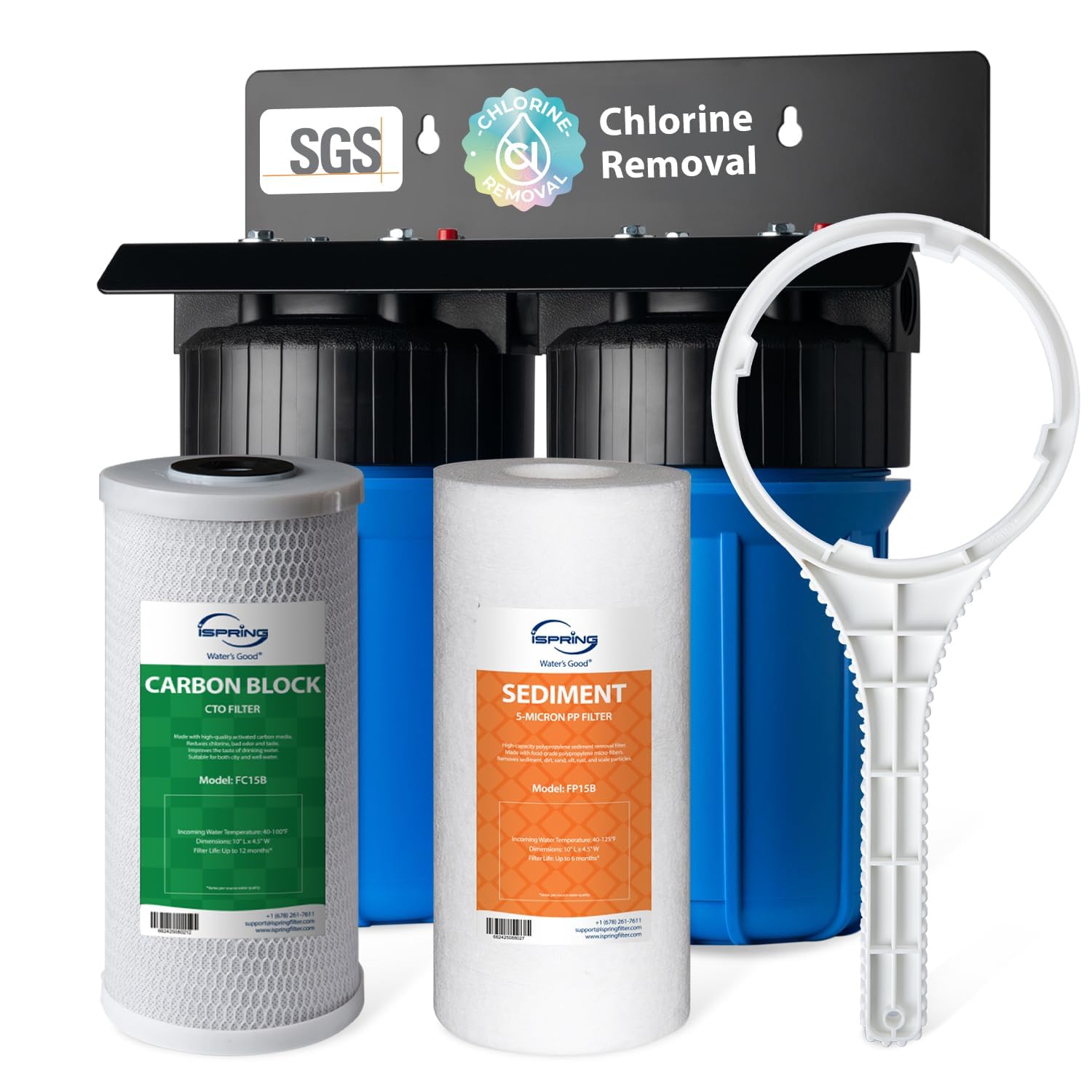
- Best for: Budget-conscious whole-house filtration
- Filter Capacity: 50,000 gallons
- Flow Rate: 1-inch ports
- Filtration Stages: 2
This post may contain affiliate links. As an Amazon Associate we earn from qualifying purchases.
Quick Comparison
| Award | Product | APT Score About LAT ScoreThe APT Score is our own rating from 0 to 10, based on performance, design and build, ease of use, and value. It reflects independent research and is never influenced by manufacturers, retailers, or affiliate commissions. Learn more › | Price | |
|---|---|---|---|---|
| Best Overall |
iSpring WGB32B 3-Stage Whole House Water Filter
|
8.9/10 | $420.00 | Buy |
| Best Budget |
iSpring WGB21B 2-Stage Whole House Water Filter
|
8.8/10 | $155.99 | Buy |
| Top Rated |
 iSpring RCC7AK-BN Alkaline 6-Stage RO System |
8.8/10 | $199.99 | Buy |
| Best Premium |
Aquasure AS-HS50SCZ 50,000-Grain Water Softener
|
8.8/10 | $679.99 | Buy |
| Most Popular |
 APEC ROES-50 5-Stage Reverse Osmosis System |
8.6/10 | $179.99 | Buy |
| Also Great |
 Aquasure Harmony AS-HS48D 48K-Grain Water Softener |
8.4/10 | $629.99 | Buy |
| Best Value |
 A.O. Smith AO-WH Whole House Water Filter |
8.3/10 | $399.00 | Buy |
| Also Great |
 Kenmore 350 32,000 Grain Water Softener |
8.1/10 | $621.50 | Buy |
iSpring WGB32B 3-Stage Whole House Water Filter
This commercial-grade system provides chlorine-free water for the entire home, removing up to 99% of chlorine, sediment, and odors while preserving healthy minerals. Its high flow rate and DIY-friendly design make it a strong candidate for homeowners seeking a tankless, whole-house solution.
Pros
- Effectively removes chlorine, sediment, and bad tastes/odors
- High flow rate (15 GPM) suitable for whole-home use
- DIY installation supported with manual and video guides
- Maintains beneficial minerals unlike reverse osmosis systems
- Includes extended warranty and lifetime tech support with registration
Cons
- Large physical footprint requires significant installation space
- Annual filter replacement is a recurring cost and task
iSpring WGB21B 2-Stage Whole House Water Filter
This whole-house system uses a two-stage process to filter sediment and remove chlorine, bad tastes, and odors for every faucet. With a high flow rate and a capacity of up to 50,000 gallons, it's a robust, no-power option for families looking to protect their plumbing and appliances.
Pros
- Comprehensive two-stage filtration tackles sediment and chlorine/VOCs
- High 50,000-gallon capacity and 15 GPM flow rate minimize maintenance and pressure drop
- DIY-friendly installation with pre-assembled bracket and included wrench
- No electricity required for operation
- Retains beneficial minerals, unlike reverse osmosis systems
Cons
- Bulky dimensions (26"L x 19"W x 11"H) require significant installation space
- Filter replacements are a long-term recurring cost
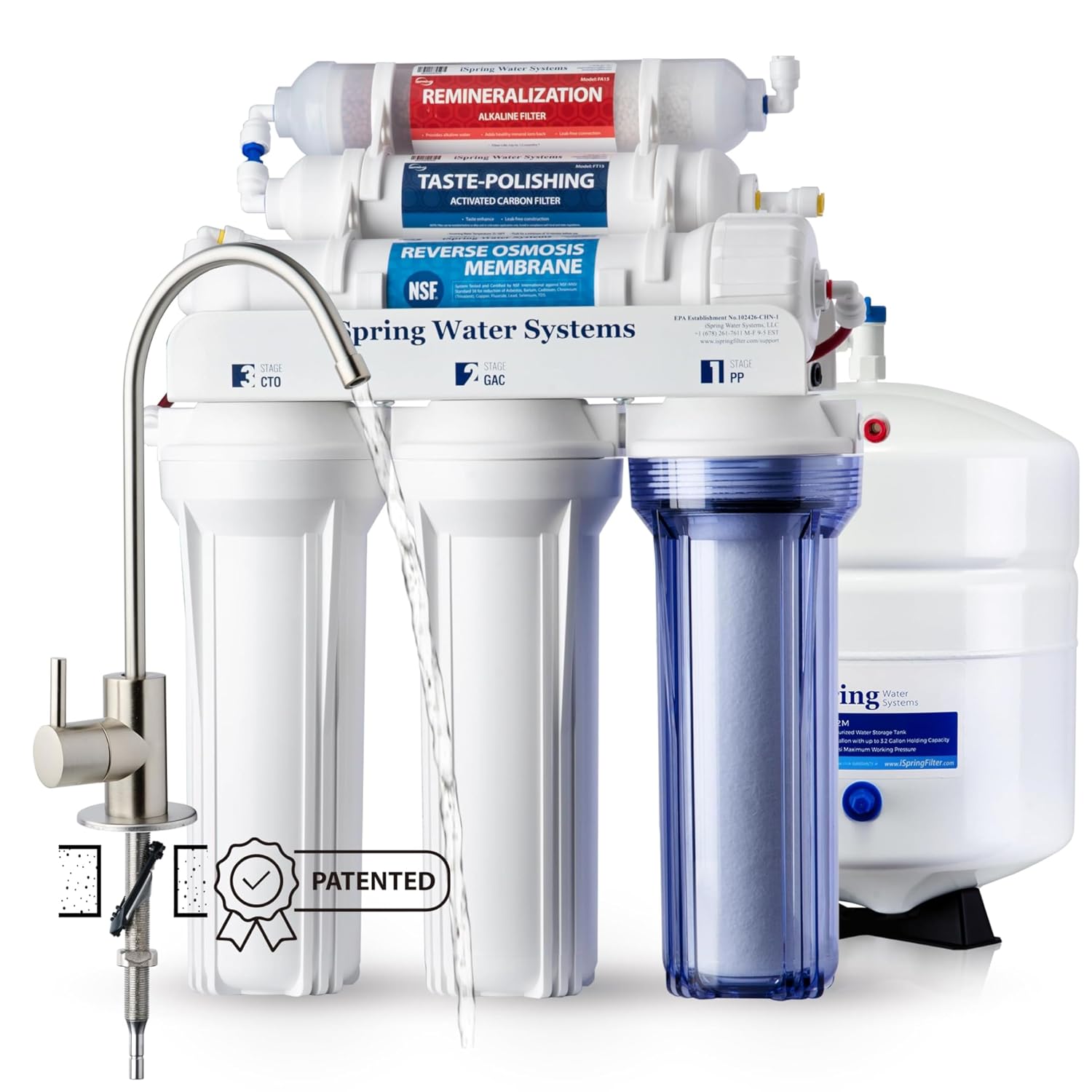
iSpring RCC7AK-BN Alkaline 6-Stage RO System
This NSF-certified reverse osmosis system delivers highly purified water with a mineral boost for improved taste and pH. Its patented top-mounted faucet design is a standout feature for anyone dreading a difficult under-sink installation.
Pros
- NSF 58 certified for the entire system, ensuring verified contaminant reduction
- Patented top-mounted faucet simplifies countertop installation
- Alkaline remineralization stage adds healthy minerals back into the water
- Transparent first-stage housing allows for easy filter life monitoring
- Includes a comprehensive set of tools and lifetime technical support
Cons
- Filter life for the primary sediment/carbon stage is only six months
- System has a relatively large footprint under the sink
Aquasure AS-HS50SCZ 50,000-Grain Water Softener
This whole-house water softener is sized for homes with 3-4 bathrooms, using a digital metered system to reduce water waste during regeneration. Its triple pre-filter tackles a broad range of sediment and chemicals before softening.
Pros
- High 50,000-grain capacity suitable for families
- Digital metered control head for efficient, on-demand regeneration
- Triple-purpose pre-filter removes various contaminants
- Comes with a 5-year manufacturer warranty
- Well-rated by users with a 4.6-star average
Cons
- Large 48-inch height requires significant vertical installation space
- Specifications list both Reverse Osmosis and Ion Exchange, creating potential confusion about the primary purification method
APEC ROES-50 5-Stage Reverse Osmosis System
This under-sink reverse osmosis system provides high-capacity filtration, delivering up to 50 gallons of purified water per day. It's a comprehensive, DIY-friendly kit well-suited for households seeking a reliable, NSF-certified solution to reduce a wide range of contaminants.
Pros
- Highly effective 5-stage filtration removes a broad spectrum of impurities, including heavy metals and PFAs.
- DIY-friendly installation with quick-connect fittings and clear instructions simplifies setup.
- Includes all necessary components, such as a brushed nickel faucet, tank, and filter set, for a complete solution.
- Backed by over 20 years of manufacturer experience and strong user reviews.
Cons
- The 0.03 GPM flow rate is relatively slow for immediate dispensing.
- Filter replacements are required every 6-24 months, representing an ongoing maintenance cost.
Aquasure Harmony AS-HS48D 48K-Grain Water Softener
A high-capacity whole-house water softener designed for larger homes with 3-4 bathrooms. Its digital metered control head allows for easy customization and monitoring, while its pre-filter tackles a wide range of common water contaminants.
Pros
- High 48,000-grain capacity suitable for larger households
- Programmable digital control head for customizable, automated operation
- Triple-purpose pre-filter removes sediment, chlorine, and other contaminants
- Built with corrosion-resistant materials and backed by a 5-year warranty
Cons
- Large physical footprint (62 inches tall)
- Heavy unit at 120 pounds, which may complicate DIY installation
A.O. Smith AO-WH Whole House Water Filter
This whole-house filter system uses a long-lasting central filter to reduce chlorine taste and odor from every tap. It's designed for larger households and offers straightforward DIY installation, though it's not a water softener.
Pros
- Effectively reduces chlorine taste and odor by 96.9%
- Very long filter life rated for 6 years or 600,000 gallons
- Includes components for DIY installation, no plumber needed
- NSF/ANSI 42 certified for chlorine reduction
- No drainage, back flushing, or water waste during operation
Cons
- Does not reduce TDS, sulfur, or iron
- Not a water softening system
- Requires some additional tools for installation
Kenmore 350 32,000 Grain Water Softener
This compact whole-house water softener is designed for small households of 1-4 people dealing with hard water. Its IntelliSoft AI technology optimizes salt usage by learning water patterns, and its built-in sediment shield offers extra protection for plumbing and appliances.
Pros
- IntelliSoft AI learns usage patterns to regenerate only when needed, optimizing salt consumption.
- Compact design fits in tight spaces while maintaining strong water pressure with a high-flow valve.
- Built-in sediment shield helps protect appliances and plumbing from sand and grit.
- Comes with a robust warranty: 1-year full, 3 years on electronics, and 10 years on the tank.
- Reduces hard water minerals to help prevent scale, stains, and soap scum.
Cons
- Manual/gravity-fed power source requires user attention for salt replenishment.
- Limited to a maximum flow rate of 7.2 gallons per minute.
How We Picked
We compiled this list by analyzing specifications, verified customer feedback, and brand reputation across 8 systems. Our goal was to provide an objective comparison across different types of water treatment solutions.
We focused on several key criteria to ensure each selection serves a distinct purpose:
- Filtration Capacity & Flow Rate: The system must handle a household’s daily water usage without a significant pressure drop.
- Contaminant Removal Capability: We prioritized systems with clear claims against specific impurities like chlorine, sediment, and hardness minerals.
- Ease of Installation & Maintenance: DIY-friendly designs with accessible filter changes were favored.
- Warranty & Support: Strong manufacturer backing and accessible customer service were considered.
- Value Over Time: We looked at the total cost of ownership, including filter replacement schedules and efficiency.
Best Water Filtration and Softener Systems for Home Buying Guide
Understand Your Water Problem First
Before buying anything, identify what’s in your water. Are you dealing with scale on fixtures (hardness), a chlorine smell (common disinfectant), or visible sediment?
A simple water evaluation kit can reveal your hardness level in grains per gallon (GPG) and identify other contaminants. A whole-house filter like the A. O.
Smith Whole House Water Filter System excels at tackling chlorine and sediment for the entire home but won’t soften water. Conversely, a softener addresses hardness but may not filter out other impurities.
For a deeper look at sediment removal, see our guide to whole house sediment filters for hard water.
Match Capacity to Household Size
Systems are rated for a certain capacity, either in gallons (filters) or grains (softeners). Undersizing leads to frequent, costly regeneration or filter changes, while oversizing is inefficient.
For a family of four, a 50,000-gallon filter or a 32,000-50,000 grain softener is typically a good starting point.
Consider your peak water usage; if multiple showers and appliances run simultaneously, prioritize a system with a high flow rate (measured in GPM) to maintain pressure.
If you’re considering a salt-free option, our best salt-free water softeners guide covers effective alternatives.
Consider Installation and Upkeep
Whole-house systems require installation at your main water line, often needing bypass valves and proper drainage for softeners. Under-sink systems like the iSpring RCC7AK-BN NSF Certified, 75 GPD are simpler but only treat one faucet.
Factor in the long-term maintenance: filter change intervals, salt refills for softeners, and the cost and availability of replacement parts. A system with a clear manual and good support, as highlighted in our Water Filters resources, saves future headaches.
For those on a budget, our roundup of water softeners under $1,000 offers reliable picks.
Quick Checklist
- I have evaluated my water to know the primary contaminants (hardness, chlorine, sediment).
- I have calculated my household’s estimated daily water usage.
- I have confirmed the system’s flow rate (GPM) meets my home’s peak demand.
- I understand the installation requirements and have the necessary space and plumbing access.
- I have budgeted for the ongoing costs of filter replacements or salt.
Related reading: For more detailed comparisons on specific filtration technologies, check out our Water Filters hub.
Why You Should Trust Us
AirpurifierTop Review is an independent review site that evaluates water treatment systems through comprehensive research. We do not conduct our own product trials; our evaluations are grounded in research, published data, expert review consensus, and verified buyer feedback.
Each product is scored on our 0 to 10 APT Score based on consistent criteria including filtration capacity, contaminant removal, ease of installation, warranty, and long-term value.
Our recommendations are unbiased, and we may earn a commission when you purchase through our links, which helps support our research.
Final Thoughts
- Best Overall: iSpring WGB32B Commercial-Grade Whole House Water Filter System, With a three-stage filtration design handling up to 100,000 gallons and a high flow rate, it earned the highest APT Score in our analysis for whole-home chlorine and sediment removal.
- Best for Large Homes with Hard Water: Aquasure Harmony Series 50,000 Grains Whole House Water Softener, This digital metered softener with built-in pre-filter tackles high hardness levels efficiently, making it ideal for larger households.
- Best Budget Whole-House Filtration: iSpring WGB21B 2-Stage Whole House Water Filtration System, Offering reliable two-stage filtration at a lower price point, it provides solid value for basic sediment and chlorine reduction.
- Best Under-Sink RO System: iSpring RCC7AK-BN NSF Certified 6-Stage Reverse Osmosis System, For point-of-use drinking water with remineralization, this under-sink RO system scored well for its certified performance and easy maintenance.
For further research on maintaining your system, visit our Water Filters guide.
Once your system arrives, inspect all components before installation, ensure you have the necessary tools, and set a calendar reminder for your first filter change or salt check to keep your water quality consistently high.
Frequently Asked Questions
What is the best water filtration and softener system for home in 2026?
The best system depends on your water quality and needs. For whole-home removal of chlorine, sediment, and odors, a multi-stage filtration system like the iSpring WGB32B is ideal.
For combating hard water scale, a water softener such as the Aquasure Harmony Series is necessary. Many of our top picks come from brands with strong reputations in 2026.
How do I know what size water softener I need?
Calculate your daily grain removal requirement: multiply your household’s daily water usage (in gallons) by your water’s hardness (in grains per gallon). Choose a softener with a grain capacity that exceeds this number to avoid regenerating too frequently.
Systems like the Kenmore 350 Whole House Water Softener System are designed for specific household sizes to simplify this choice.
Can I install a whole house system myself?
Many systems are marketed as DIY-friendly with clear manuals and video guides. Installation typically involves cutting into your main water line, installing bypass valves, and securing the unit. If you’re not comfortable with plumbing, hiring a professional is recommended.
Proper installation is crucial for performance and to avoid leaks. For more tips, see our whole house sediment filter guide.
What’s the difference between a filter and a softener?
A filter physically removes contaminants like sediment, chlorine, and chemicals. A softener uses an ion-exchange process to replace hardness minerals (calcium, magnesium) with sodium or potassium ions, which don’t cause scale.
Some systems, like certain Aquasure models, combine a pre-filter with the softening resin. Learn more about these technologies in our Water Filters category.
How often do filters need to be replaced?
Replacement frequency varies by model, water quality, and usage. Sediment filters may need changing every 3-6 months, while carbon blocks can last 6-12 months. Whole-house systems often have capacities of 50,000 to 100,000 gallons.
Always follow the manufacturer’s guidelines and monitor your water pressure and taste for signs a change is needed.
Do water softeners waste water and salt?
Modern, efficient softeners with digital metered valves, like those in the Aquasure Harmony Series, regenerate based on actual water usage, minimizing waste. They use only the water and salt needed to clean the resin bed.
Older timer-based models are less efficient. Proper sizing and settings are key to conservation. For more information, check our water softener buying guide.
About the author
Contributor, Smart Home & Appliance Tech. Amara covers smart features in home appliances, including app control, sensors, voice assistants and automation, and notes when a feature adds real value and when it is a gimmick.