The 3 Best Whole House Sediment Filters of 2026
Whole house sediment filters catch sand, rust, and debris before they reach your taps. Top 3 models from iSpring, Waterdrop, PUREPLUS stand out in November 2026.
 By Olivia Bennett
Updated November 12, 2026
Rusty showers, clogged appliance valves, and gritty drinking water are common signs your home needs a whole house sediment filter. These systems tackle the dirt, sand, and silt that can damage plumbing and degrade water quality before it reaches any faucet. Choosing the right model comes down to filtration capacity, micron rating, and ease of maintenance.
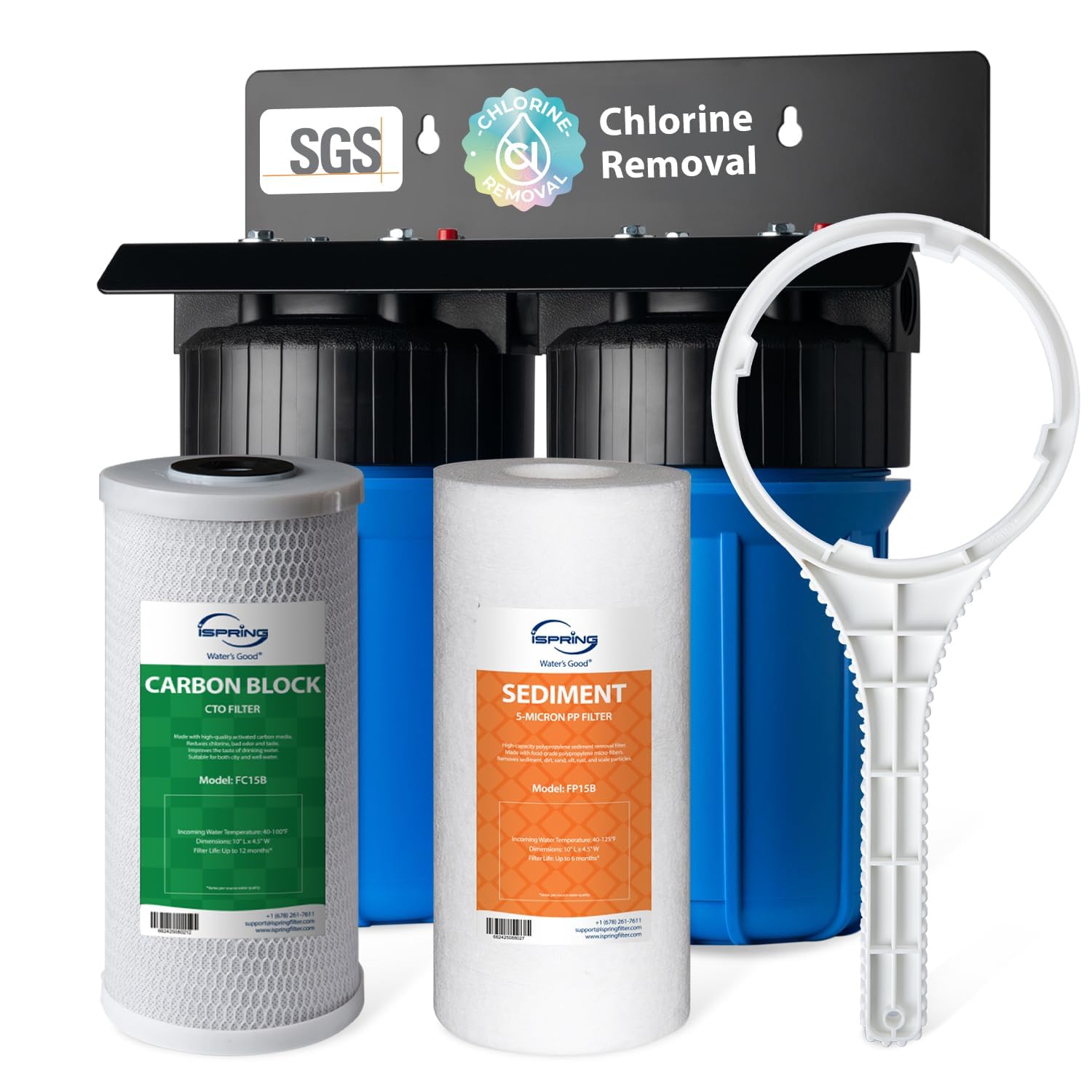
For most households, we recommend the iSpring WGB21B 2-Stage Whole House Water for its comprehensive two-stage filtration and high capacity. If you’re specifically looking for a pre-filter to protect existing equipment, the Waterdrop RPFK Spin Down Sediment Filter offers an excellent first line of defense. For more on tackling specific water issues, explore our guide on the best water softeners for hard water.
The 3 Best Whole House Sediment Filters on Our Shortlist (November 2026)
- Best for: Comprehensive whole-home filtration
- Filtration Stages: 2-Stage
- Capacity: 50,000 Gallons
- Micron Rating: 5 Micron

- Best for: Certified performance & monitoring
- Certification: NSF/ANSI 42
- Features: Pressure gauges included
- Housing Size: 10″ x 4.5″

- Best for: Pre-filtration & easy maintenance
- Type: Spin-down sediment filter
- Filter Material: 316L Stainless Steel
- Micron Rating: 40-50 Micron
This post may contain affiliate links. As an Amazon Associate we earn from qualifying purchases.
Quick Comparison
| Award | Product | APT Score About LAT ScoreThe APT Score is our own rating from 0 to 10, based on performance, design and build, ease of use, and value. It reflects independent research and is never influenced by manufacturers, retailers, or affiliate commissions. Learn more › | Price | |
|---|---|---|---|---|
| Best Overall |
PUREPLUS WFM10BB2 Whole House Water Filter System
|
8.8/10 | $129.99 | Buy |
| Top Rated |
iSpring WGB21B 2-Stage Whole House Water Filter
|
8.8/10 | $155.99 | Buy |
| Best Budget |
Waterdrop RPFK Spin Down Sediment Filter
|
8.4/10 | $49.99 | Buy |
PUREPLUS WFM10BB2 Whole House Water Filter System
This two-stage whole-house system, certified to NSF/ANSI 42, provides broad protection by reducing sediment and chlorine. Its standard 10x4.5-inch housing and included pressure gauges simplify installation and maintenance for a straightforward filtration upgrade.
Pros
- NSF/ANSI 42 certified for chlorine, taste, and odor reduction
- Standard 10x4.5-inch housing is compatible with many systems
- Includes external pressure gauges to monitor filter life
- Designed for whole-house coverage at the point of entry
Cons
- Limited to sediment and chlorine/taste/odor reduction, not a comprehensive softener or RO system
iSpring WGB21B 2-Stage Whole House Water Filter
This whole-house system uses a two-stage process to filter sediment and remove chlorine, bad tastes, and odors for every faucet. With a high flow rate and a capacity of up to 50,000 gallons, it's a robust, no-power option for families looking to protect their plumbing and appliances.
Pros
- Comprehensive two-stage filtration tackles sediment and chlorine/VOCs
- High 50,000-gallon capacity and 15 GPM flow rate minimize maintenance and pressure drop
- DIY-friendly installation with pre-assembled bracket and included wrench
- No electricity required for operation
- Retains beneficial minerals, unlike reverse osmosis systems
Cons
- Bulky dimensions (26"L x 19"W x 11"H) require significant installation space
- Filter replacements are a long-term recurring cost
Waterdrop RPFK Spin Down Sediment Filter
This whole-house sediment filter acts as a first line of defense for your water supply, trapping sand, rust, and other particles down to 50 microns. It's built with durable, BPA-free and NSF372-certified materials, and features a convenient backwash function for easy maintenance.
Pros
- NSF372 certified and lead-free, with BPA-free housing for safe water
- Durable German-made PA12 shell withstands high pressure and water hammer
- Convenient backwash function simplifies cleaning without disassembly
- Includes multiple fitting types (1”MNPT, 3/4”MNPT, 3/4” FNPT) for flexible installation
Cons
- Operating temperature range is limited to 41°F to 100°F
- Maximum supported TDS level is 300 PPM, which may not suit all water sources
How We Picked
We evaluated the latest whole house sediment filter models based on objective specifications and verified owner feedback. Our goal was to identify systems that deliver reliable performance for different household needs. We focused on key criteria to ensure our selections provide tangible benefits.
- Filtration Capacity & Micron Rating: The total gallons filtered before replacement and the size of particles captured.
- System Type & Stages: Whether it’s a simple spin-down pre-filter or a multi-stage system with carbon blocks.
- Certifications & Materials: Validation from bodies like NSF/ANSI and the use of BPA-free, food-grade components.
- Ease of Installation & Maintenance: DIY-friendliness, included tools, and clarity of filter change indicators.
- Flow Rate & Pressure Loss: Ensuring adequate water pressure is maintained throughout the home after installation.
Buying Guide: Making Sense of Best Whole House Sediment Filters
Assess Your Water and Filtration Needs
Start by identifying the primary sediment issues in your water. Is it fine silt, visible sand, or rust flakes? A lower micron rating (like 5 microns) captures finer particles but may clog faster if your water is heavily laden. For coarse sediment, a spin-down filter with a 40-50 micron stainless steel screen, like the Waterdrop RPFK Spin Down Sediment Filter, can be manually cleaned and acts as an excellent pre-filter to extend the life of finer systems downstream.
Understand Capacity and System Longevity
Filter capacity, measured in gallons, dictates how often you’ll need replacements. A 50,000-gallon capacity can serve a family of four for about a year, while smaller capacities mean more frequent changes. Consider not just the initial cost but the long-term expense and availability of replacement cartridges. Systems with clear pressure gauges or change indicators remove the guesswork from maintenance schedules.
Prioritize Compatibility and Installation
Check the inlet/outlet port size (common are 1″ or 3/4″) and the physical space where the system will be installed. Most whole-house systems are installed at the point of entry, after the main shutoff valve and before the water heater. Ensure the unit comes with necessary mounting brackets and tools, like a filter wrench. For complex plumbing, consulting a professional is wise. If you have an RV, our guide on the best rv water filters covers mobile-specific solutions.
Quick Checklist
- Identify your main sediment type (sand, silt, rust).
- Calculate your household’s approximate monthly water usage.
- Measure available installation space and note your main water line size.
- Verify the availability and cost of replacement filter cartridges.
- Confirm the system’s materials are certified lead-free and BPA-free.
Related reading: For targeted filtration at a single point, see our review of the best faucet water filters.
FAQs
What is the best whole house sediment filters in 2026?
The “best” depends on your specific water conditions and home size. For most people seeking to remove sediment and improve taste, a two-stage system like the PUREPLUS 2-Stage Whole House Water Filter offers a great balance of performance and certified quality.
How do I know what micron rating I need?
A lower micron rating (e.g., 1 or 5) captures finer particles but requires more frequent changes. Start with a higher rating (e.g., 20-50) for visible sand or rust. You can always add a finer secondary filter later if needed. Understanding your home’s water filtration needs holistically is key.
Can I install a whole house filter myself?
Many systems are designed for DIY installation with clear instructions and included tools. You’ll need to locate your main water line, shut off the water, and have basic plumbing tools. If you’re not comfortable soldering or working with main water lines, hiring a plumber is recommended.
Will a sediment filter slow my water pressure?
A properly sized system with 1-inch ports typically causes minimal pressure loss. However, as the filter cartridge becomes clogged with sediment, pressure can drop. This is why monitoring with a pressure gauge and changing filters on schedule is crucial.
How often do the filters need to be replaced?
Replacement frequency varies by water quality and filter capacity. A standard sediment cartridge might last 3-6 months, while a high-capacity system can last a year. Always follow the manufacturer’s guidelines and change filters when you notice a significant drop in water pressure.
Do these filters remove bacteria or chemicals?
Standard sediment filters are designed for physical particles. To remove chlorine, chemicals, or biological contaminants, you need additional filtration stages, like activated carbon or UV light. For comprehensive home air and water quality solutions, browse our Air Purifiers category as well.
Final Thoughts
Selecting the right whole house sediment filter simplifies down to matching a system to your home’s specific challenges. The iSpring WGB21B 2-Stage Whole House Water is our top pick for most homes because it combines sediment removal with carbon filtration for noticeably cleaner water from every tap. The PUREPLUS 2-Stage Whole House Water Filter is ideal for those who prioritize certified performance and want the clarity of pressure gauges for maintenance. For a durable, cleanable pre-filter that protects appliances, the Waterdrop RPFK Spin Down Sediment Filter is a standout choice. Once your system arrives, inspect all components before installation and have replacement cartridges on hand for when the time comes. For more guidance on improving your home’s water, check out our resource on the best shower filters for hard water.
About the author
Editor, Upright & Canister Vacuums. Olivia covers corded upright and canister vacuums and carpet cleaners. Her reviews focus on filtration, attachments, weight, maintenance and long-term running costs.