Best Water Softeners 2026: Reviews & Picks
Hard water creates limescale and reduces appliance lifespan. These top-rated water softeners for 2026 provide effective solutions for cleaner fixtures and softer laundry.
 By Hannah Brooks
Updated November 12, 2026
Dealing with hard water means battling limescale buildup on fixtures, dry skin and hair after showering, and appliances that wear out prematurely. When choosing a water softener or conditioner, the key decisions revolve around your home’s water usage (capacity), whether you prefer salt-based softening or salt-free conditioning, and the ease of installation and ongoing maintenance.
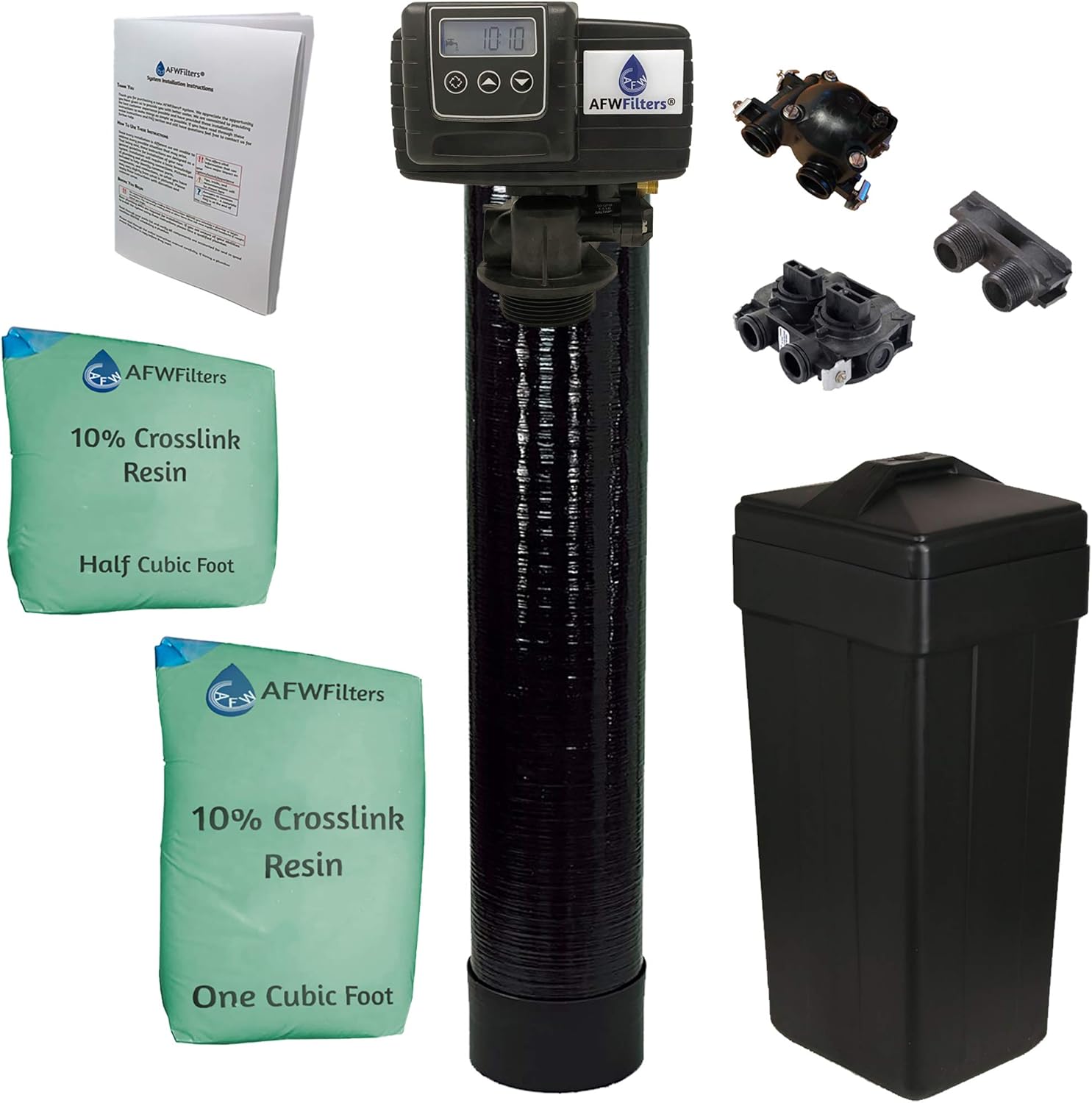
After a detailed analysis, our top pick for most households is the AFWFilters Fleck 5600 SXT Digital Water Softener for its robust performance and efficient design. For those seeking a salt-free alternative to prevent scale without removing minerals, the iSpring ED2000 Whole House Water Descaler is a standout choice. Learn more about solutions for hard water in our dedicated guide.
The 3 Best Water Softeners on Our Shortlist (November 2026)
- Best for: Whole-house softening with high capacity
- Capacity: 48,000 grains
- Type: Salt-based digital
- Valve: Fleck 5600SXT

- Best for: Homes with 3-4 bathrooms
- Capacity: 48,000 grains
- Type: Digital metered
- Pre-filter: Triple-purpose
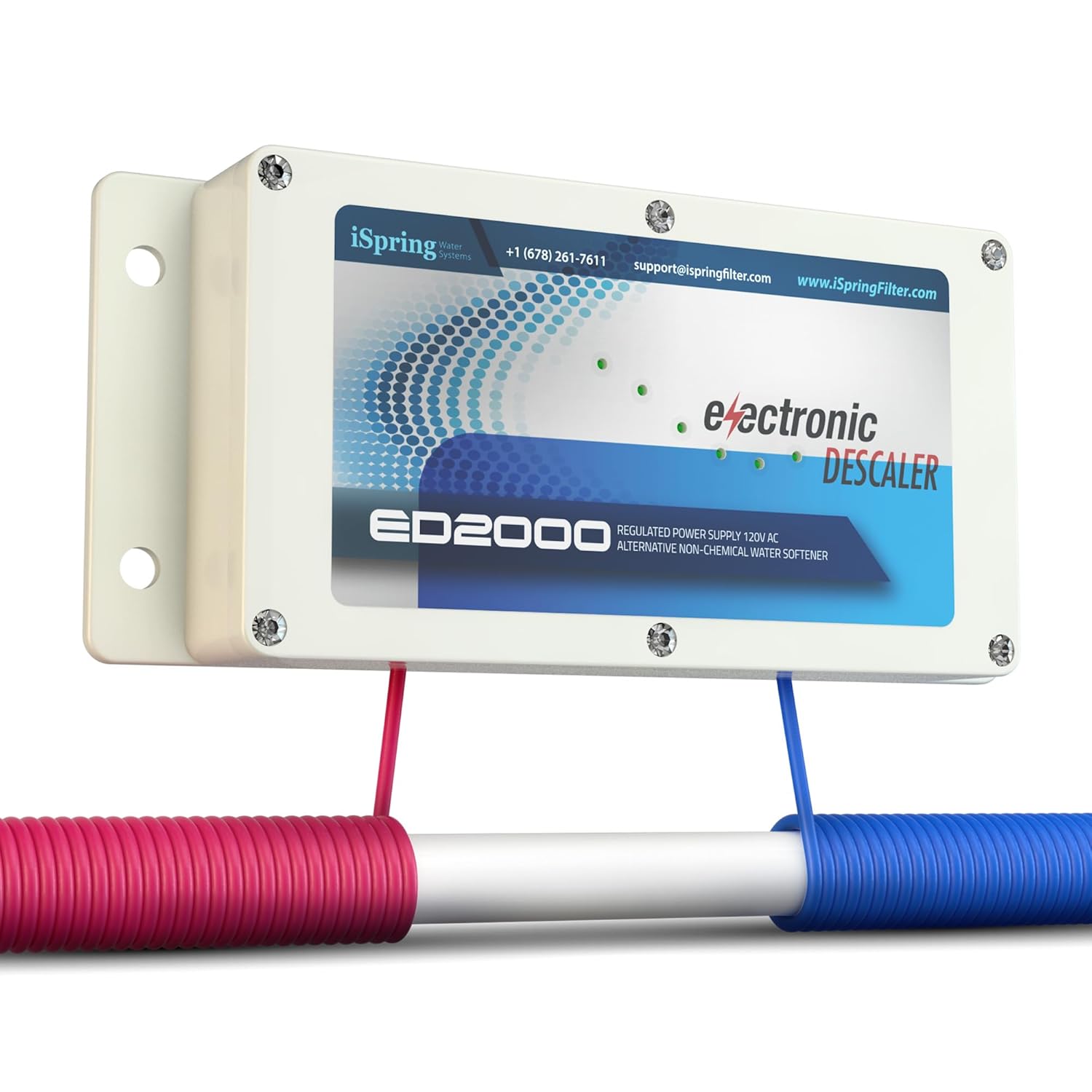
- Best for: Salt-free scale prevention
- Type: Electronic descaler
- Pipe Compatibility: Any pipe
- Maintenance: None
This post may contain affiliate links. As an Amazon Associate we earn from qualifying purchases.
Quick Comparison
| Award | Product | APT Score About LAT ScoreThe APT Score is our own rating from 0 to 10, based on performance, design and build, ease of use, and value. It reflects independent research and is never influenced by manufacturers, retailers, or affiliate commissions. Learn more › | Price | |
|---|---|---|---|---|
| Best Overall |
AFWFilters Fleck 5600SXT 48K-Grain Water Softener
|
8.8/10 | $804.99 | Buy |
| Best Premium |
Aquasure Harmony AS-HS48D 48K-Grain Water Softener
|
8.4/10 | $629.99 | Buy |
| Best Budget |
 A.O. Smith AO-WH-DSCLR Whole House Descaler |
8.3/10 | $399.99 | Buy |
| Best Value |
 Kenmore 350 32,000 Grain Water Softener |
8.1/10 | $621.50 | Buy |
| Top Rated |
iSpring ED2000 Salt-Free Whole House Water
|
8.0/10 | $159.99 | Buy |
AFWFilters Fleck 5600SXT 48K-Grain Water Softener
This high-capacity water softener uses an efficient metered system and upgraded resin to combat hard water throughout a home. Its USA-assembled construction and comprehensive kit make it a solid choice for those seeking a durable, whole-house solution.
Pros
- Features a 48,000-grain capacity and efficient meter-demand regeneration for consistent soft water.
- Uses upgraded 10% crosslink resin designed to resist chlorine and maintain performance longer.
- Comes as a complete, USA-assembled system with detailed instructions for standard home plumbing integration.
Cons
- Its large size and weight (130 lbs) may present a challenge for DIY installation.
- Requires access to a drain, power outlet, and sufficient space for the brine and mineral tanks.
Aquasure Harmony AS-HS48D 48K-Grain Water Softener
A high-capacity whole-house water softener designed for larger homes with 3-4 bathrooms. Its digital metered control head allows for easy customization and monitoring, while its pre-filter tackles a wide range of common water contaminants.
Pros
- High 48,000-grain capacity suitable for larger households
- Programmable digital control head for customizable, automated operation
- Triple-purpose pre-filter removes sediment, chlorine, and other contaminants
- Built with corrosion-resistant materials and backed by a 5-year warranty
Cons
- Large physical footprint (62 inches tall)
- Heavy unit at 120 pounds, which may complicate DIY installation
A.O. Smith AO-WH-DSCLR Whole House Descaler
This whole-house descaler offers a low-maintenance, salt-free approach to controlling moderate water hardness. It's designed for households of four or more and requires no electricity or ongoing consumables like salt bags.
Pros
- Salt-free and chemical-free scale prevention
- No electricity, cleaning, or backwashing required
- Long filter life of up to 6 years or 600,000 gallons
- Works with both city and well water systems
Cons
- Does not soften water or remove hardness-causing minerals
- Not effective for high hardness above 15 grains per gallon
- Does not reduce TDS, sulfur, or iron
Kenmore 350 32,000 Grain Water Softener
This compact whole-house water softener is designed for small households of 1-4 people dealing with hard water. Its IntelliSoft AI technology optimizes salt usage by learning water patterns, and its built-in sediment shield offers extra protection for plumbing and appliances.
Pros
- IntelliSoft AI learns usage patterns to regenerate only when needed, optimizing salt consumption.
- Compact design fits in tight spaces while maintaining strong water pressure with a high-flow valve.
- Built-in sediment shield helps protect appliances and plumbing from sand and grit.
- Comes with a robust warranty: 1-year full, 3 years on electronics, and 10 years on the tank.
- Reduces hard water minerals to help prevent scale, stains, and soap scum.
Cons
- Manual/gravity-fed power source requires user attention for salt replenishment.
- Limited to a maximum flow rate of 7.2 gallons per minute.
iSpring ED2000 Salt-Free Whole House Water
This electronic water conditioner offers a salt-free alternative to traditional softeners, using a magnetic waveform to reduce limescale throughout a home's plumbing. It's a good fit for those seeking a maintenance-free solution that preserves water's beneficial minerals. Its straightforward, tool-free installation on most pipe types is a major plus.
Pros
- Salt-free and chemical-free operation, no ongoing maintenance required
- Easy, non-invasive installation on PEX, PVC, and other pipes without plumbing modifications
- Preserves healthy minerals in water while reducing scale buildup
- Energy-efficient design that can lower utility bills over time
Cons
- Not a complete replacement for traditional water softeners in areas with very hard water (over 25 grains)
- May require additional units for large homes or complex plumbing systems
- Effectiveness can be reduced by high iron content in the water supply
How We Picked
We compared 5 top-rated systems to identify the best water softeners and conditioners. Our selection process was based on objective data, including manufacturer specifications, verified customer feedback, and key performance indicators for this category. We focused on the following criteria to ensure our recommendations are reliable and tailored to different needs.
- Capacity & Grain Rating: Matching the system’s grain capacity to household size and water hardness level.
- Technology Type: Evaluating the differences between traditional salt-based ion exchange softeners and salt-free conditioners or descalers.
- Control & Efficiency: Assessing digital metered controls for salt and water efficiency versus simpler timer-based or non-electric systems.
- Installation & Compatibility: Considering the complexity of installation, necessary plumbing modifications, and compatibility with different pipe materials.
- Warranty & Support: Reviewing the length and coverage of manufacturer warranties and the availability of customer support.
Buying Guide: Making Sense of Best Water Softeners
Determine Your Water Hardness and Household Needs
The first step is to understand your water’s hardness level, typically measured in grains per gallon (GPG). You can get this information from your municipal water report or use a test kit. A system’s grain capacity must exceed your household’s daily usage to avoid frequent regenerations. For example, a family of four with moderately hard water might be well-served by a 32,000-grain system like the Kenmore 350 Whole House Water Softener System, which is designed specifically for 1-4 person households.
Salt-Based Softener vs. Salt-Free Conditioner
This is the fundamental choice. Salt-based softeners, like the Aquasure Harmony Series 48,000 Grains Whole House, physically remove calcium and magnesium ions, providing truly “soft” water that feels slick and reduces soap use. Salt-free conditioners, such as the A. O. Smith Descaler, use template-assisted crystallization or electronic pulses to alter the structure of hardness minerals so they don’t stick to surfaces; they prevent scale but don’t soften water in the traditional sense. The right choice depends on your goals, local regulations on brine discharge, and dietary preferences. For a related solution, explore our guide to the best shower filters for hard water.
Control System and Efficiency
For salt-based systems, the control head dictates efficiency. Metered systems regenerate based on actual water usage, saving salt and water. Timer-based systems regenerate on a schedule, which can be wasteful. Look for features like demand-initiated regeneration and salt monitoring. Advanced systems may even learn your household’s patterns to optimize regeneration cycles.
Quick Checklist
- Have you tested your water’s hardness level (in GPG)?
- Have you calculated your household’s average daily water usage?
- Is a salt-based softener allowed and practical for your home?
- Do you have the space and plumbing setup for the system’s installation?
- Have you reviewed the warranty terms and available technical support?
Related reading: For other whole-home solutions, check out our category page on Water Filters.
FAQs
What is the best water softeners in 2026?
The “best” depends entirely on your specific water conditions and needs. Our top-rated pick for whole-house softening is the AFWFilters Fleck 5600 SXT, known for its reliability and efficient metered control. For a broader look at home water treatment, visit our Water Filters hub.
How do I know what grain capacity I need?
Multiply your daily water usage (in gallons) by your water’s hardness (in GPG). This gives your daily grain removal need. Choose a system with a grain capacity that allows for regeneration no more than once per week to ensure efficiency and consistent performance.
Can I install a water softener myself?
Many homeowners with basic plumbing skills can install a standard system, especially if it includes a bypass valve and clear instructions. However, salt-free electronic descalers like the iSpring ED2000 are often the easiest, requiring only wrapping cables around the main pipe with no cutting or plumbing changes. For complex setups or if you’re unsure, professional installation is recommended.
Do salt-free systems actually soften water?
No, they are technically water conditioners or descalers. They do not remove hardness minerals like calcium and magnesium. Instead, they change the structure of these minerals so they don’t form scale deposits on pipes and appliances. You won’t get the same “slick” feeling as with soft water, but you will get scale prevention. The A. O. Smith Whole House Salt-Free Scale Control is a prime example of this technology.
What maintenance is required?
Salt-based softeners require adding salt to the brine tank regularly and occasional cleaning. Salt-free conditioners typically require no ongoing maintenance, which is a significant advantage for many users. All systems benefit from an annual check-up to ensure they are functioning correctly.
Will a water softener affect my water pressure?
A properly sized and installed system should have a minimal impact on water pressure. Look for models with high-flow valves, especially if you have multiple bathrooms or use water simultaneously in different parts of the house. For other pressure-related solutions, see our review of the best rv water filters.
Final Thoughts
Selecting the right system comes down to matching its strengths to your situation. The AFWFilters Fleck 5600 SXT is best for whole-house softening with high capacity, offering efficient, demand-based regeneration for larger homes. The Aquasure Harmony Series excels for homes with 3-4 bathrooms, combining high capacity with a helpful triple-purpose pre-filter. The iSpring ED2000 is the ideal choice for salt-free scale prevention, providing an easy, maintenance-free solution that works on any pipe material. Regardless of your choice, upon delivery, check all components against the packing list, ensure you have the necessary tools and fittings for installation, and familiarize yourself with the initial setup and programming instructions. For more home appliance insights, explore our Cleaning Gear category.
About the author
Managing Editor & Buying Guides. Hannah oversees the editorial calendar and edits every buying guide. She makes sure each guide states its criteria up front, shows pros and cons side by side, and says who a product is not for.