Best Smoke And Carbon Monoxide Alarms For Bedrooms 2026: Reviews & Comparison
Choosing the right alarm is crucial for bedroom safety. We evaluated 10 top models for November 2026 to identify the most reliable options.
 By Priya Natarajan
Updated November 12, 2026
You’re lying in bed at night, worried that a silent, odorless threat could be building up in your home while you sleep. The fear of a fire starting or carbon monoxide leaking is real, especially in the bedroom where you’re most vulnerable. Choosing the right alarm for this crucial space comes down to three key decisions: finding a model with reliable detection technology, ensuring it’s quiet enough for the bedroom (no one wants false alarm chirps at 3 AM), and confirming it integrates well with your existing home safety setup.

After analyzing the market, we recommend the as the best pick for most bedrooms due to its proven reliability. For those seeking a unit with a digital display for real-time carbon monoxide readings, the is a strong contender. For more general safety advice and product insights, explore our air purifier category.
The 3 Best Smoke And Carbon Monoxide Alarms For Bedrooms on Our Shortlist (November 2026)
- Best for: Proven reliability and peace of mind
- Sensor Type: Dual photoelectric & electrochemical
- Power Source: Hardwired with battery backup
- Interconnect: Up to 24 units
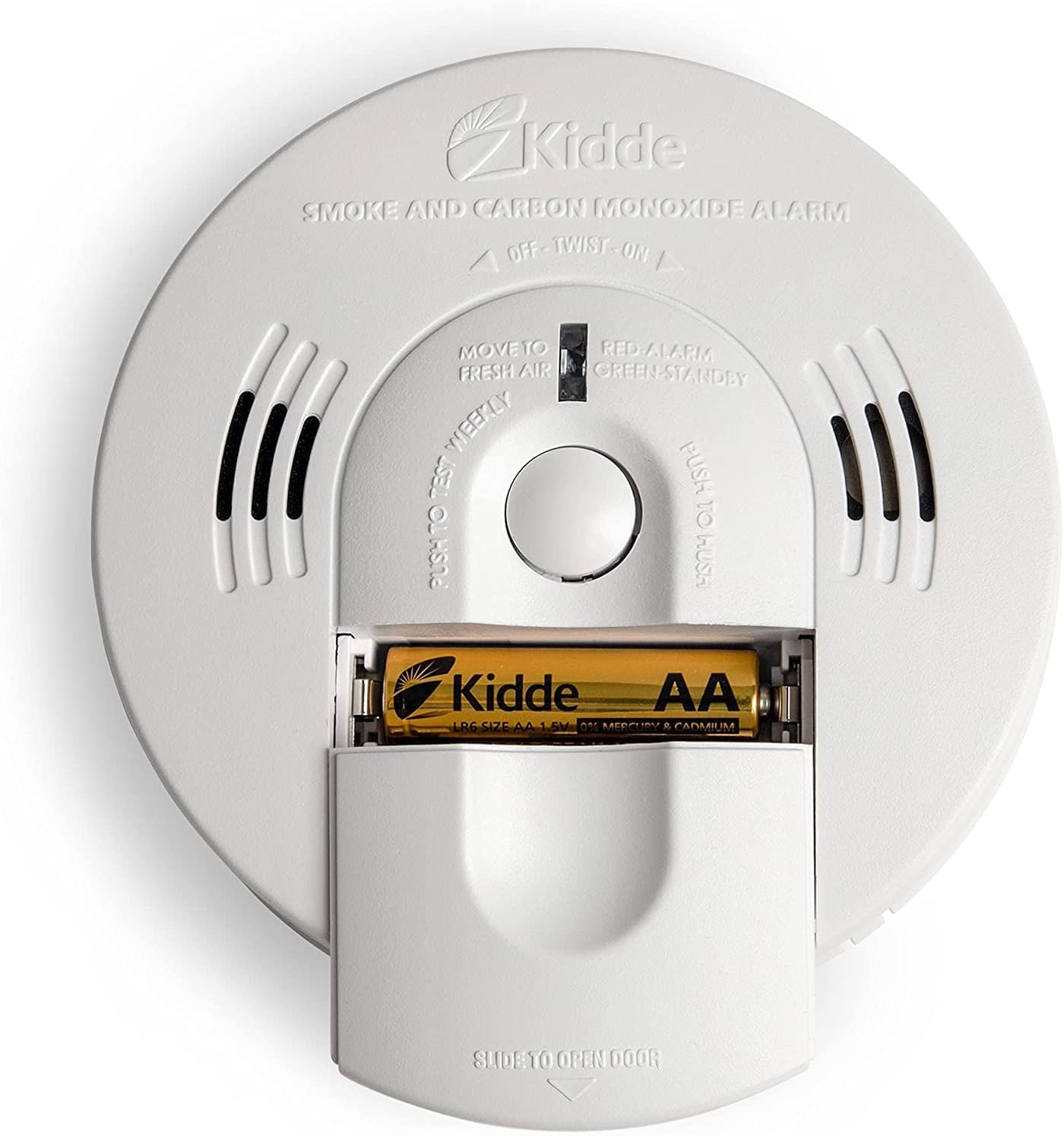
- Best for: Real-time CO level monitoring
- Display: Digital CO readout
- Sensor Type: 10-year electrochemical
- Voice Alerts: Clear voice warnings

- Best for: Smart home integration
- Connectivity: Wi-Fi enabled
- Alerts: Smartphone notifications
- Power Source: Hardwired or battery
This post may contain affiliate links. As an Amazon Associate we earn from qualifying purchases.
Quick Comparison
| Award | Product | APT Score About LAT ScoreThe APT Score is our own rating from 0 to 10, based on performance, design and build, ease of use, and value. It reflects independent research and is never influenced by manufacturers, retailers, or affiliate commissions. Learn more › | Price | |
|---|---|---|---|---|
| Best Overall |
First Alert SC9120B Hardwired Smoke & CO Detector
|
8.9/10 | $70.00 | Buy |
| Best Premium |
Kidde KN-COSM-IBA Hardwired Smoke & CO Detector
|
8.8/10 | $130.00 | Buy |
| Most Popular |
X-Sense SC07 10-Year Smoke and Carbon Monoxide
|
8.6/10 | $36.99 | Buy |
| Best Value |
 X-Sense XP0H-WN Wireless Smoke & CO Detector |
8.8/10 | $125.99 | Buy |
| Also Great |
 First Alert SMCO100V-AC Voice Alarm |
7.5/10 | $59.05 | Buy |
| Top Rated |
 Kidde KN-COPE-IC Hardwired Smoke & CO Alarm |
8.8/10 | $139.00 | Buy |
| Best Budget |
 X-Sense SC01 10-Year Battery Smoke and CO Detector |
8.8/10 | $36.99 | Buy |
| Also Great |
 Kidde 30CUA10-V Hardwired Smoke and CO Detector |
8.0/10 | $74.97 | Buy |
| Also Great |
 Siterlink GS886A-3WCAR Hardwired Smoke and CO |
8.1/10 | $263.99 | Buy |
| Also Great |
 HEIMAN HM-636THS Smoke & CO Detector Combo |
8.4/10 | $35.98 | Buy |
First Alert SC9120B Hardwired Smoke & CO Detector
This hardwired detector combines ionization smoke and electrochemical CO sensing with a battery backup for continuous protection. It's designed for homeowners seeking a permanent, interconnected safety solution. The single review/silence button and tamper-resistant locks offer straightforward operation and installation.
Pros
- Hardwired with battery backup ensures operation during power outages
- Interconnects with up to 18 compatible devices for whole-home alerts
- Single button simplifies evaluation and silencing non-emergency alarms
- Tamper-resistant locking features enhance safety and security
- High user rating (4.7 stars) indicates reliable performance
Cons
- Hardwired installation requires electrical expertise
- Uses a 9V battery, which some may find less common than AA or lithium cells
Kidde KN-COSM-IBA Hardwired Smoke & CO Detector
This hardwired combination alarm provides dual protection from both smoke and carbon monoxide, with battery backup for power outages. Its interconnectivity allows it to link with up to 24 other Kidde devices for whole-home coverage, and a clear voice alert announces specific dangers.
Pros
- Dual smoke and CO detection in one unit
- Battery backup ensures protection during power failures
- Interconnectable with up to 24 Kidde devices for a synchronized system
- Clear voice alerts identify the specific threat
- Features a temporary silence (Hush) function
Cons
- Uses ionization sensor technology, which may be less responsive to smoldering fires compared to photoelectric sensors
- A maximum of only 12 smoke alarms can be interconnected within the 18-device initiation limit
- Relatively large physical dimensions (5.6 inches wide and deep)
X-Sense SC07 10-Year Smoke and Carbon Monoxide
This standalone combo detector offers a decade of maintenance-free protection with its sealed battery. It combines photoelectric smoke and electrochemical CO sensors, and its simple installation makes it a practical choice for a basic, reliable safety device.
Pros
- 10-year sealed lithium battery eliminates maintenance
- Dual photoelectric smoke and electrochemical CO sensors
- Simple, wire-free installation with included hardware
- UL 217 and UL 2034 certified for safety compliance
- Well-rated by a large number of verified buyers
Cons
- No wireless interconnection, Wi-Fi, or smart features
- Basic standalone model lacks connectivity options
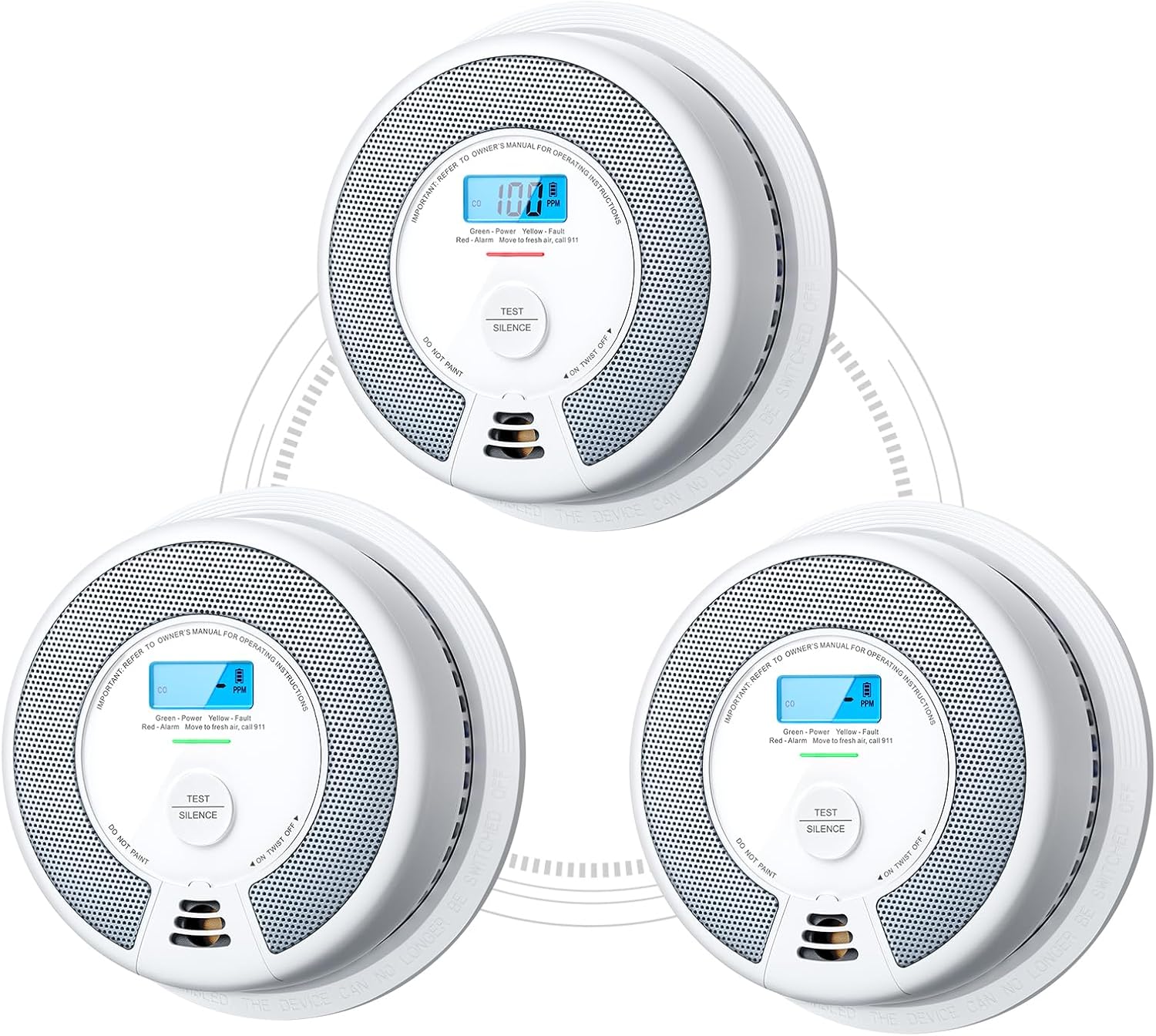
X-Sense XP0H-WN Wireless Smoke & CO Detector
This 3-pack of RF-interconnected detectors offers a straightforward, battery-powered solution for whole-home smoke and carbon monoxide protection. Its standout feature is the 10-year sealed battery, eliminating the hassle of frequent replacements.
Pros
- 10-year sealed lithium battery for long-term, maintenance-free operation
- RF wireless interconnection ensures all alarms sound simultaneously for whole-home alerting
- Large 5.7-inch mounting bracket helps conceal old installation marks for a cleaner look
- Combines photoelectric smoke and electrochemical CO detection in one unit
- ETL listed to UL 217 and UL 2034 safety standards
Cons
- Lacks Wi-Fi connectivity and cannot connect to a central base station for remote alerts
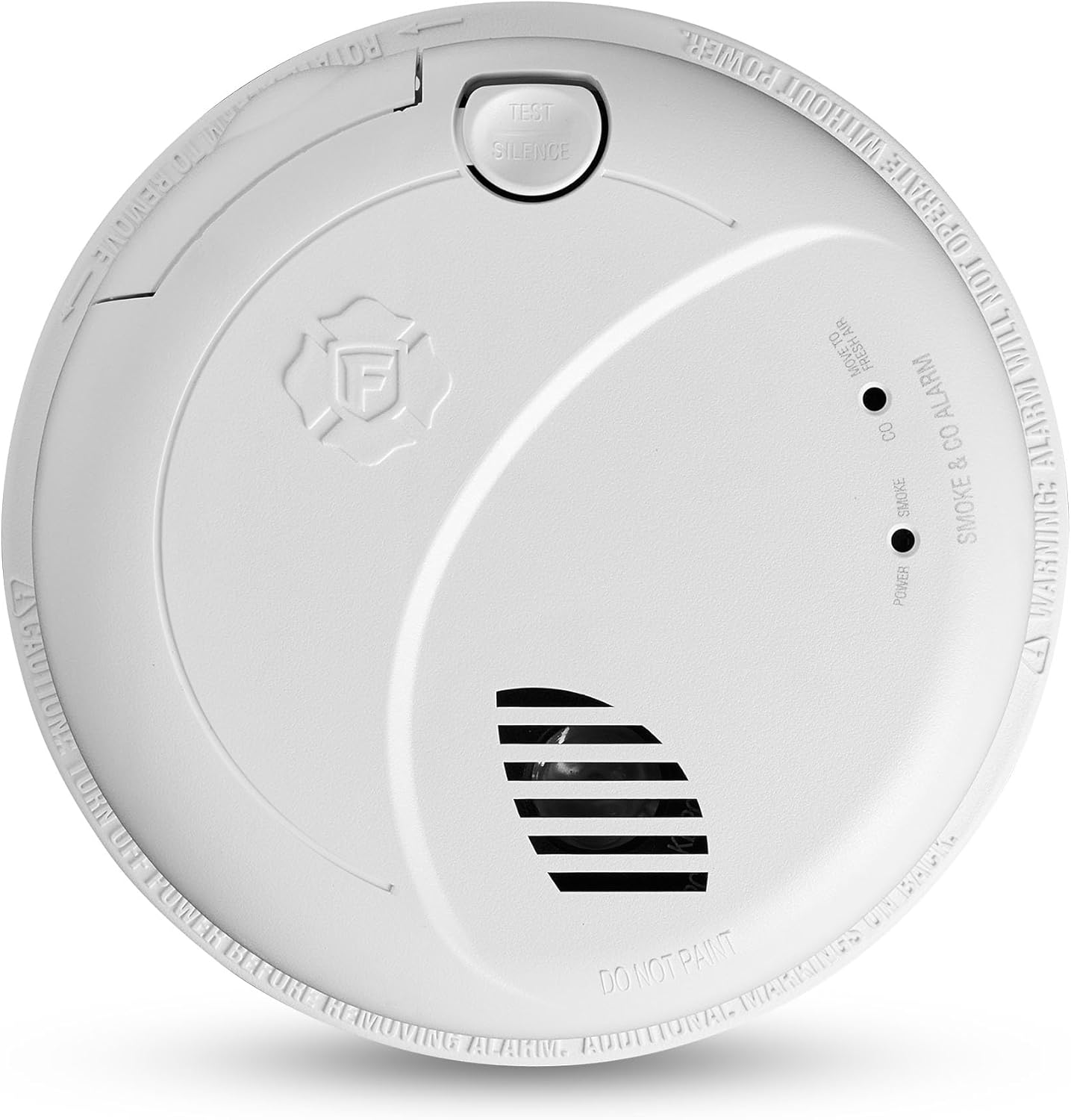
First Alert SMCO100V-AC Voice Alarm
This hardwired combination alarm monitors for both smoke and carbon monoxide, providing a comprehensive safety alert. Its voice feature announces the type and location of danger, which is particularly useful in a larger, interconnected home system.
Pros
- Combines smoke and carbon monoxide detection in one unit
- Voice and location alerts for clear hazard identification
- Interconnects with compatible alarms for whole-home warning
- Includes battery backup for protection during power outages
- Features quick-connect plug for simplified installation
Cons
- The 3.8-star rating suggests some users may have had reliability or performance issues
Kidde KN-COPE-IC Hardwired Smoke & CO Alarm
This hardwired combination alarm offers reliable dual protection against both fire and carbon monoxide. Its convenient front-load battery door simplifies maintenance, and the voice alerts clearly announce the specific hazard.
Pros
- Hardwired with 9V battery backup for continuous operation
- Voice alerts announce "Fire" or "Warning: Carbon Monoxide" for clear hazard identification
- Front-load battery door makes replacement easy without removing the unit
- Interconnects with up to 24 other Kidde alarms for whole-home safety
- UL Certified and meets multiple safety standards
Cons
- Requires professional installation for hardwired connection
- Limited to photoelectric smoke sensing, which may be less responsive to fast-flaming fires compared to dual-sensor models
X-Sense SC01 10-Year Battery Smoke and CO Detector
This standalone combination alarm provides dual smoke and carbon monoxide protection, powered by a sealed 10-year battery for hassle-free operation. Its simple, wire-free installation makes it a straightforward choice for adding basic safety coverage to a single room or area.
Pros
- 10-year sealed lithium battery eliminates the need for frequent battery changes or hardwiring
- Combined smoke and CO detection in one compact unit
- ETL certified to meet UL 217 and UL 2034 safety standards
- Loud 85 dB alarm with upgraded sensors for faster response
- Simple installation with mounting hardware included
Cons
- Does not support wireless interconnection with other units
- No Wi-Fi or smart home connectivity features
- Basic standalone model lacks integration with a base station
Kidde 30CUA10-V Hardwired Smoke and CO Detector
This dual-sensor alarm combines hardwired reliability with a long-term battery backup, providing continuous protection against fire and carbon monoxide. Its clear voice alerts and interconnect capability make it a solid choice for homeowners and property managers prioritizing integrated home safety.
Pros
- Dual smoke and CO detection with reportedly fast response
- Hardwired power with a built-in 10-year battery backup
- Clear voice alerts differentiate between fire and CO hazards
- Interconnects with other Kidde alarms for whole-home alerts
- Meets key UL safety standards
Cons
- Interconnection compatibility is limited to other Kidde units
- Some users report sensitivity to cooking fumes despite enhanced sensing
Siterlink GS886A-3WCAR Hardwired Smoke and CO
This hardwired combination detector offers dual-sensor protection against smoke and carbon monoxide. Its ability to interconnect up to 18 units makes it a solid choice for homeowners seeking comprehensive, whole-home coverage with a reliable battery backup.
Pros
- Advanced photoelectric smoke and electrochemical CO sensors for accurate detection.
- Hardwired with 2AA battery backup for continuous monitoring during power outages.
- Interconnect capability for up to 18 units ensures alerts throughout the home.
- Voice alert function clearly announces the specific type of danger.
- One-touch mute button can silence nuisance alarms for 10 hours.
Cons
- Large physical dimensions (6.1" x 6.1" x 1.7") may be noticeable on ceilings.
- The 5-pack format might be more than some smaller homes require.
HEIMAN HM-636THS Smoke & CO Detector Combo
This 2-in-1 device combines photoelectric smoke and electrochemical carbon monoxide detection in one unit. Its main draw is a 10-year sealed lithium battery, designed to eliminate maintenance and hardwiring costs for a decade. With dual-sensor technology and rigorous certifications, it's a practical choice for homeowners and landlords seeking consolidated, long-term safety monitoring.
Pros
- Long-lasting 10-year sealed lithium battery eliminates frequent replacements and hardwiring
- Dual-sensor protection (photoelectric smoke and electrochemical CO) in a single unit
- Meets latest UL 217 and UL 2034 safety standards and is CSFM approved
- Features an 85dB audio-visual alarm with a 20-second memory flash for missed alerts
- Includes smart diagnostics for low battery and end-of-life warnings
Cons
- Photoelectric sensor is less responsive to fast-flaming fires compared to ionization types
- The product dimensions (roughly 5" diameter) may be bulkier than some single-sensor units
How We Picked
We built this list by comparing specifications, certifications, and design features critical for bedroom safety. Our goal was to identify alarms that offer not just basic protection, but features that enhance reliability and usability where you sleep.
- Detection Technology: Prioritizing photoelectric smoke sensors (better for smoldering fires) and electrochemical CO sensors.
- Alarm Volume & Clarity: Seeking loud, distinct tones for smoke vs. CO, plus voice alerts for clear instruction.
- Power Source & Backup: Evaluating hardwired vs. battery-only models and the quality of battery backup systems.
- Interconnectivity: Assessing the ability to link multiple alarms for whole-home safety.
- Ease of Maintenance: Considering features like test/silence buttons, end-of-life signals, and battery replacement access.
Buying Guide: Making Sense of Best Smoke And Carbon Monoxide Alarms For Bedrooms
Sensor Type Matters Most
For bedroom protection, the sensor technology is non-negotiable. Photoelectric smoke sensors are more responsive to the smoldering fires common from electrical issues or bedding, while electrochemical sensors are the standard for accurate carbon monoxide detection. Look for units that specify both. A model like the highlights its dual-sensor approach, which is a key feature for comprehensive coverage.
Power Source and Reliability
Hardwired alarms with battery backup are generally considered the most reliable, as they draw constant power from your home’s electrical system but remain operational during outages. Battery-only models offer easier installation but require diligent battery checks. Consider your home’s wiring and your own maintenance habits when choosing.
Interconnectivity for Whole-Home Safety
If your bedroom alarm detects danger, you want alarms in other parts of the house to sound as well. Interconnected alarms, either via wire or wireless signal, provide this crucial early warning, especially important for bedrooms far from the source of smoke or CO. The is known for its robust interconnect capability. For a deeper dive into interconnected home safety systems, check out our air purifier resources, which often cover complementary air quality topics.
Quick Checklist
- Does it use photoelectric smoke detection and electrochemical CO detection?
- Is the alarm loud enough (85 dB minimum) with distinct signals for smoke and CO?
- What is the power source, and does it have a reliable backup?
- Can it interconnect with other alarms in your home?
- Does it have a clear test/silence button and an end-of-life indicator?
Related reading: For more information on maintaining a safe home environment, visit our air purifier category page.
FAQs
What is the best smoke and carbon monoxide alarms for bedrooms in 2026?
The “best” depends on your needs. For most, a reliable dual-sensor, hardwired unit with battery backup is ideal. Our top pick balances proven performance with essential features.
How many alarms do I need for my bedrooms?
You should have at least one alarm in each bedroom and one outside each sleeping area (like a hallway). For multi-story homes, install alarms on every level, including the basement. Interconnecting them is highly recommended.
Can I install a hardwired alarm myself?
If you’re replacing an existing hardwired alarm and are comfortable turning off power at the breaker, you can often do it yourself by matching the wiring harness. For new installations, especially if your home lacks existing wiring, a licensed electrician is advised. Battery-only models like the are designed for easy DIY installation.
How often should I test my bedroom alarm?
Test your smoke and CO alarms at least once a month by pressing the test button. This ensures the electronics, sounder, and battery (if present) are working. Develop a routine, like testing on the first day of every month.
What does the end-of-life signal mean?
Most modern alarms are designed to last 10 years. An end-of-life signal (usually a periodic chirp different from a low-battery chirp) indicates the sensors are no longer reliable, and the entire unit must be replaced. Do not just remove the battery.
Are smart alarms worth it for a bedroom?
Smart alarms that send alerts to your phone can be valuable, especially if you’re often away from home. They provide peace of mind and can alert you to problems even when you’re not there. For more insights on smart home air quality devices, our air purifier guides offer related advice.
Final Thoughts
When it comes to protecting your bedroom, the right alarm provides more than just a loud noise—it offers peace of mind. For most homeowners, our top recommendation combines reliable dual-sensor detection with hardwired power and battery backup, ensuring it’s always on guard. If you want to monitor carbon monoxide levels directly, the model with a digital display is an excellent choice, giving you tangible data. And for those integrating into a smart home ecosystem, the Wi-Fi enabled pick keeps you informed remotely. Each serves a distinct need, but all meet the critical safety standards required for a good night’s sleep. Remember to place your alarm correctly—on the ceiling or high on a wall, away from windows and vents—and test it monthly. For a broader look at creating a healthy home environment, explore our other safety and air quality resources.
About the author
Editor, Air Quality & Home Comfort. Priya writes explainers on air quality terms, filter standards and everyday home comfort. Her articles stay practical and general, and they never give medical advice.