Best Reverse Osmosis Systems For Drinking Water 2026: Reviews & Comparison
Clean, great-tasting water is essential for any home. Our 2026 review highlights the best reverse osmosis systems that deliver on performance and reliability.
 By Amara Okafor
Updated November 12, 2026
Choosing a reverse osmosis system can feel overwhelming, especially when you’re dealing with concerns about tap water taste, contaminants like lead or fluoride, and the hassle of installation. The key decisions boil down to filtration capacity and stages, compatibility with your water pressure and under-sink space, and the ease of ongoing maintenance.

After evaluating the top contenders, we believe the iSpring RCC7AK-BN NSF Certified, 75 GPD is the best overall pick for most homes due to its certified performance and balanced design. For those with very low water pressure who need maximum efficiency, the iSpring RCC7P-AK, 6-Stage Reverse Osmosis System with its integrated booster pump is a standout choice. For more on tackling different water quality issues, explore our guide on the best water softeners for hard water.
The 3 Best Reverse Osmosis Systems For Drinking Water on Our Shortlist (November 2026)
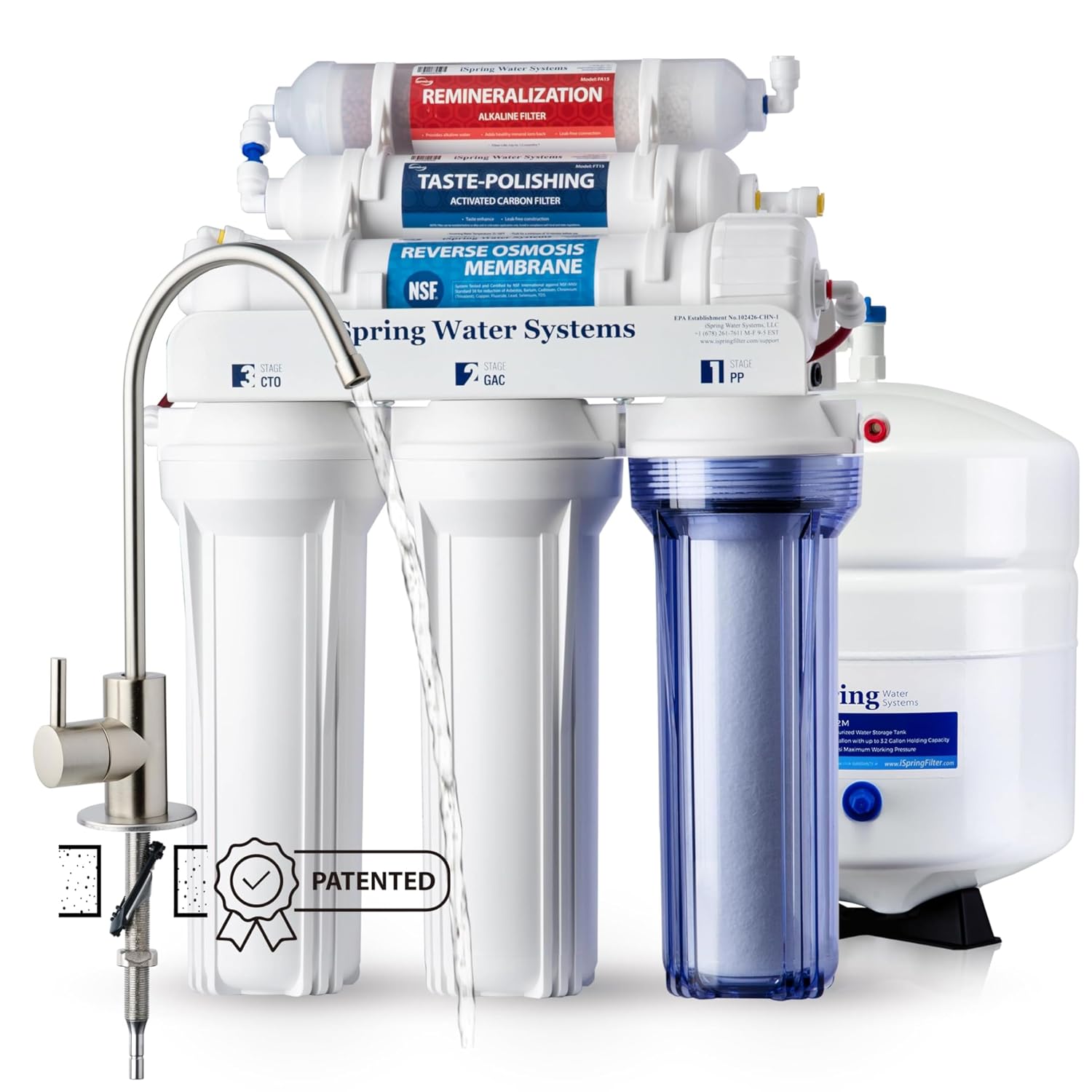
- Best for: Certified contaminant reduction
- Stages: 6
- Flow Rate: 75 GPD
- Certification: NSF/ANSI 58
- Best for: Low water pressure homes
- Stages: 6
- Feature: Integrated booster pump
- Filtration: 99% of 1000+ contaminants

- Best for: Straightforward, reliable filtration
- Stages: 5
- Flow Rate: 50 GPD
- Filtration: 99.99% of impurities
This post may contain affiliate links. As an Amazon Associate we earn from qualifying purchases.
Quick Comparison
| Award | Product | APT Score About LAT ScoreThe APT Score is our own rating from 0 to 10, based on performance, design and build, ease of use, and value. It reflects independent research and is never influenced by manufacturers, retailers, or affiliate commissions. Learn more › | Price | |
|---|---|---|---|---|
| Best Overall |
iSpring RCC7P-AK 6-Stage Reverse Osmosis System
|
8.9/10 | $339.13 | Buy |
| Best Budget |
iSpring RCC7AK-BN Alkaline 6-Stage RO System
|
8.8/10 | $199.99 | Buy |
| Top Rated |
APEC ROES-50 5-Stage Reverse Osmosis System
|
8.6/10 | $179.99 | Buy |
| Best Value |
 Waterdrop G2 RO System, 400 GPD Tankless |
8.6/10 | $239.99 | Buy |
iSpring RCC7P-AK 6-Stage Reverse Osmosis System
A high-performance under-sink RO system designed for homes with low water pressure. Its built-in pump and six-stage filtration, which includes an alkaline remineralization stage, aim to deliver purified, better-tasting water. It's backed by robust support, making it a solid choice for thorough water treatment.
Pros
- Built-in booster pump ensures reliable performance under low water pressure
- Six-stage filtration reduces a wide range of contaminants and adds beneficial minerals back
- Comes with an extended warranty and strong technical support
Cons
- Its large footprint (15"L x 8"W x 18"H) requires significant under-sink space
- Installation, while described as easy, may be more involved than simpler filters
iSpring RCC7AK-BN Alkaline 6-Stage RO System
This NSF-certified reverse osmosis system delivers highly purified water with a mineral boost for improved taste and pH. Its patented top-mounted faucet design is a standout feature for anyone dreading a difficult under-sink installation.
Pros
- NSF 58 certified for the entire system, ensuring verified contaminant reduction
- Patented top-mounted faucet simplifies countertop installation
- Alkaline remineralization stage adds healthy minerals back into the water
- Transparent first-stage housing allows for easy filter life monitoring
- Includes a comprehensive set of tools and lifetime technical support
Cons
- Filter life for the primary sediment/carbon stage is only six months
- System has a relatively large footprint under the sink
APEC ROES-50 5-Stage Reverse Osmosis System
This under-sink reverse osmosis system provides high-capacity filtration, delivering up to 50 gallons of purified water per day. It's a comprehensive, DIY-friendly kit well-suited for households seeking a reliable, NSF-certified solution to reduce a wide range of contaminants.
Pros
- Highly effective 5-stage filtration removes a broad spectrum of impurities, including heavy metals and PFAs.
- DIY-friendly installation with quick-connect fittings and clear instructions simplifies setup.
- Includes all necessary components, such as a brushed nickel faucet, tank, and filter set, for a complete solution.
- Backed by over 20 years of manufacturer experience and strong user reviews.
Cons
- The 0.03 GPM flow rate is relatively slow for immediate dispensing.
- Filter replacements are required every 6-24 months, representing an ongoing maintenance cost.
Waterdrop G2 RO System, 400 GPD Tankless
This compact, under-sink reverse osmosis system offers a fast 400-gallon-per-day flow rate and a remarkably efficient 1:1 pure-to-drain water ratio. Its tankless design saves significant cabinet space, though it requires an electrical outlet and some drilling for installation.
Pros
- High 400 GPD flow rate provides water quickly
- Very efficient 1:1 drain ratio reduces water waste
- Tankless, compact design saves under-sink space
- NSF/ANSI 372 certified for lead-free materials
- Easy filter replacement with twist-and-pull design
Cons
- Requires under-sink electricity and drilling
- Filter life cycle is only 6 months
How We Picked
To compile this list of the best reverse osmosis systems, we analyzed 4 top-rated models from leading brands. Our selection was based on a detailed review of product specifications, verified customer ratings, and extensive owner feedback to ensure our recommendations reflect real-world performance and reliability. We prioritized objective data over marketing claims.
- Filtration Performance & Certification: We looked for systems with proven effectiveness against common contaminants, giving preference to models with independent certifications like NSF/ANSI standards.
- Capacity & Flow Rate: Gallons per day (GPD) output was evaluated to ensure systems could meet typical household drinking water demands.
- System Design & Stages: The number of filtration stages and the inclusion of features like remineralization or tankless designs were key differentiators.
- Ease of Installation & Maintenance: We favored systems with DIY-friendly designs, clear instructions, and readily available replacement filters.
- Brand Reputation & Support: Long-term reliability and accessible customer support were considered essential for a lasting investment.
Buying Guide: Making Sense of Best Reverse Osmosis Systems For Drinking Water
Understanding Filtration Stages and Certifications
Not all RO systems are created equal. The number of stages—typically 5, 6, or 7—dictates the layers of filtration. A basic 5-stage system effectively removes most contaminants, while additional stages may add alkalizing minerals or specialized polishing filters. Look for certifications from bodies like NSF International, which validate a system’s claims for reducing specific contaminants. This is crucial for ensuring the water you drink is as pure as promised. For a different approach to point-of-use filtration, see our review of the best faucet water filters.
Matching Capacity to Your Household
The Gallons Per Day (GPD) rating tells you how much purified water the system can produce in 24 hours. A 50 GPD system is sufficient for a small family, while larger households or those with higher usage might prefer 75 GPD or more. Consider the storage tank size as well; a larger tank means more immediate purified water is available, but it also takes up more space under your sink. The Waterdrop G2 Reverse Osmosis System offers a high 400 GPD flow with a space-saving tankless design, ideal for fast fill-ups.
Installation and Maintenance Reality Check
While many systems are designed for DIY installation, assess your comfort level and under-sink space. Check if you need to drill an additional hole for the faucet or have an electrical outlet nearby for models with a booster pump or digital displays. Long-term, factor in the cost and frequency of filter changes. Systems with transparent housings or smart indicators, like the APEC Water ROES-50, 5-Stage Under Sink Reverse, make it easier to know when maintenance is due.
Quick Checklist
- Verify the system’s certification for the specific contaminants present in your water.
- Measure your under-sink cabinet space, including height, width, and depth.
- Check your incoming water pressure; some systems require a minimum PSI.
- Confirm the availability and cost of replacement filter sets.
- Review the manufacturer’s warranty and customer support options.
Related reading: Learn about solutions for other water challenges in our guide to the best rv water filters.
FAQs
What is the best reverse osmosis systems for drinking water in 2026?
The “best” system depends on your specific needs. For most people seeking certified, reliable performance, our top pick is the iSpring RCC7AK-BN. It effectively balances filtration power, flow rate, and ease of use. For more specialized needs like whole-home solutions, our Water Filters category has additional resources.
How difficult is it to install a reverse osmosis system?
Most modern under-sink RO systems are designed for DIY installation with push-to-connect fittings and clear instructions. You’ll typically need basic tools like a drill for the faucet hole and a wrench. If you’re uncomfortable with plumbing, hiring a professional is always an option for a one-time fee.
Do I need a system with a booster pump?
A booster pump is essential if your home’s water pressure is below 40-50 PSI, as it ensures the RO membrane functions efficiently. It also improves water recovery, reducing waste. The iSpring RCC7P-AK includes this feature, making it a strong choice for homes with low pressure.
How often do I need to change the filters?
Filter change frequency varies by model and your water quality. Pre-filters and carbon filters typically need replacing every 6-12 months, while the RO membrane can last 2-3 years. Always follow the manufacturer’s guidelines, which are often based on gallon capacity or time intervals.
What’s the difference between tank and tankless RO systems?
Traditional systems use a storage tank to hold purified water, providing instant water pressure. Tankless systems, like the Waterdrop G2, purify water on demand, saving under-sink space and eliminating the risk of tank bacteria, but they may require an electrical connection. For other home appliances that improve living conditions, consider the best hepa air purifiers.
Will a reverse osmosis system remove healthy minerals?
Standard RO filtration does remove minerals, which can result in slightly acidic, flat-tasting water. Many systems now include a final remineralization stage that adds back beneficial minerals like calcium and magnesium, improving taste and pH balance, as seen in the iSpring 6-stage models.
Final Thoughts
Selecting the right reverse osmosis system is about matching features to your household’s specific water profile and needs. For those prioritizing independently certified contaminant reduction, the iSpring RCC7AK-BN stands out. If low water pressure is a persistent issue, the iSpring RCC7P-AK with its booster pump ensures consistent performance. And for users seeking a straightforward, reliable 5-stage filtration without extra complexity, the APEC Water ROES-50 delivers proven results. Once your system arrives, inspect all components, set aside adequate time for installation, and flush the system thoroughly as instructed before first use to ensure optimal performance and taste from day one. For maintaining other areas of your home, our Cleaning Gear section offers helpful recommendations.
About the author
Contributor, Smart Home & Appliance Tech. Amara covers smart features in home appliances, including app control, sensors, voice assistants and automation, and notes when a feature adds real value and when it is a gimmick.