The Best Mini Splits with Heat Pumps for Cold Winters
Low-ambient ratings, real capacity at 5°F and efficiency that survives January: how to choose a ductless heat pump that still heats when the mercury drops.
 By Amara Okafor
Updated November 5, 2026
Cold-climate heating is where a mini split heat pump earns or loses its reputation.
A unit that looks strong on a spec sheet can still struggle at 10°F, dropping into defrost every half hour and leaving a bedroom lukewarm by morning.
The models that hold up share a few traits: a compressor that modulates instead of switching hard on and off, a low-ambient rating far below the temperatures you actually see, and efficiency high enough that the electricity bill does not erase the savings.
For this guide, AirpurifierTop Review compared mini splits with heat pumps for cold winters using published specifications, low-ambient capacity tables, efficiency ratings, expert review consensus and verified buyer feedback.
The picks below reflect what holds up across those sources rather than what a single marketing page promises.
Renters who cannot mount an outdoor condenser are usually better served by portable air conditioners for apartments, and everyone else can start with the ranked shortlist right here.
The 3 Best Mini Splits with Heat Pumps for Cold Winters on Our Shortlist (November 2026)

- Best for: Quiet bedrooms
- Capacity: 12,000 BTU
- Noise: 17.5 dB
- Control: Alexa compatible
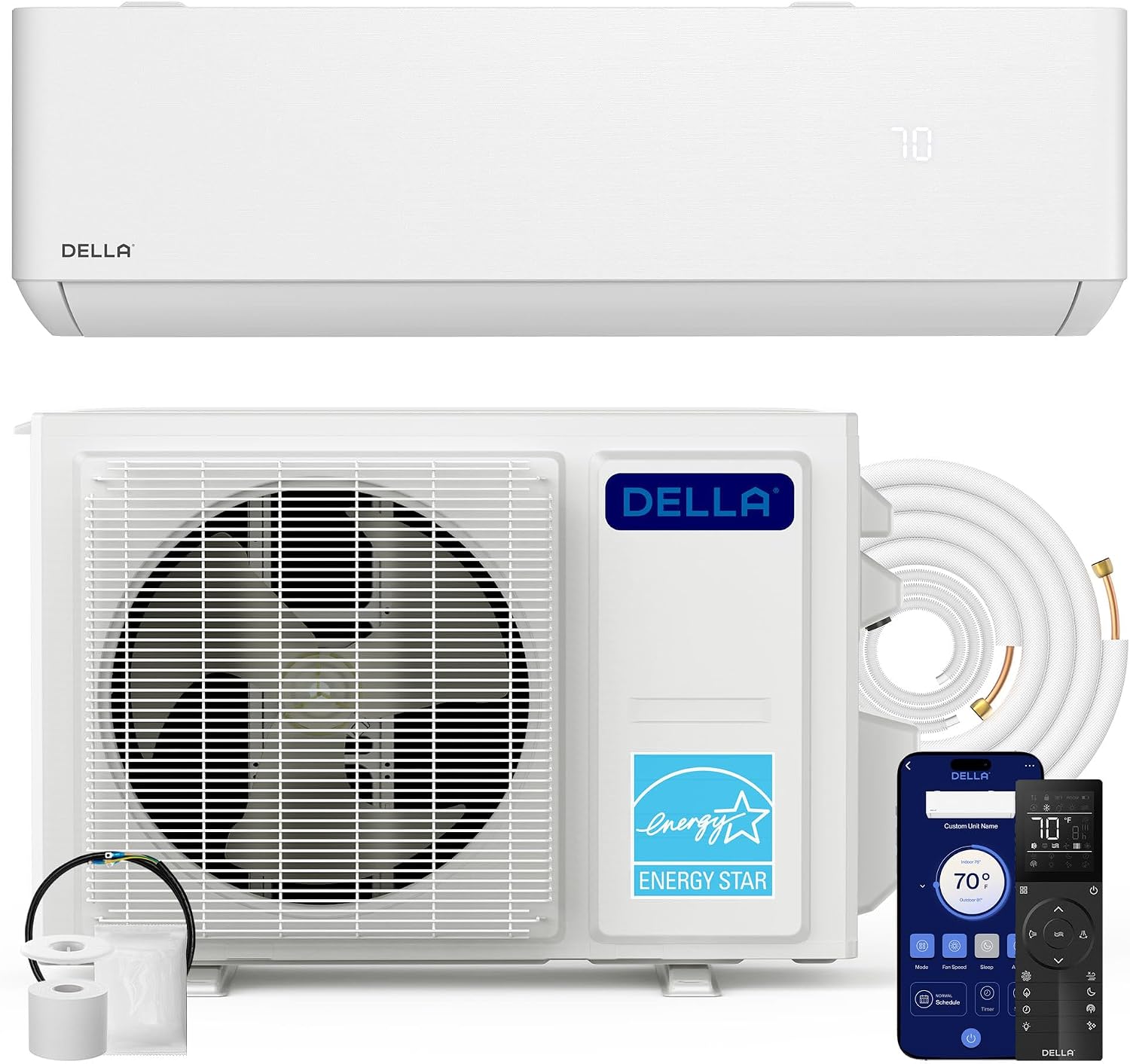
- Best for: Very cold climates
- Heating: Down to -13°F
- Efficiency: 23 SEER2
- Capacity: 9,000 BTU

- Best for: Lower upfront cost
- Capacity: 11,500 BTU
- Noise: 29 dB
- Compressor: Inverter
This post may contain affiliate links. As an Amazon Associate we earn from qualifying purchases.
| Award | Product | APT Score About LAT ScoreThe APT Score is our own rating from 0 to 10, based on performance, design and build, ease of use, and value. It reflects independent research and is never influenced by manufacturers, retailers, or affiliate commissions. Learn more › | Price | |
|---|---|---|---|---|
| Best Overall |
Rellytech ESW-001 11500 BTU Ductless Mini Split
|
8.4/10 | $409.99 | Buy |
| Best Budget |
 ROVSUN AC-W-9K Mini-Split Air Conditioner/Heat |
8.4/10 | $493.99 | Buy |
| Top Rated |
 ROVSUN RV12T1/20 Mini-Split AC/Heater |
8.4/10 | $499.98 | Buy |
| Best Value |
 ROVSUN 17K BTU Wi-Fi Mini Split AC/Heat Pump |
8.4/10 | $599.99 | Buy |
| Best Premium |
 Della Vario TL-12K1VB 12K BTU Mini Split |
8.4/10 | $799.96 | Buy |
| Most Popular |
Senville LETO 12000 BTU Mini Split Heat Pump
|
8.4/10 | $799.99 | Buy |
| Also Great |
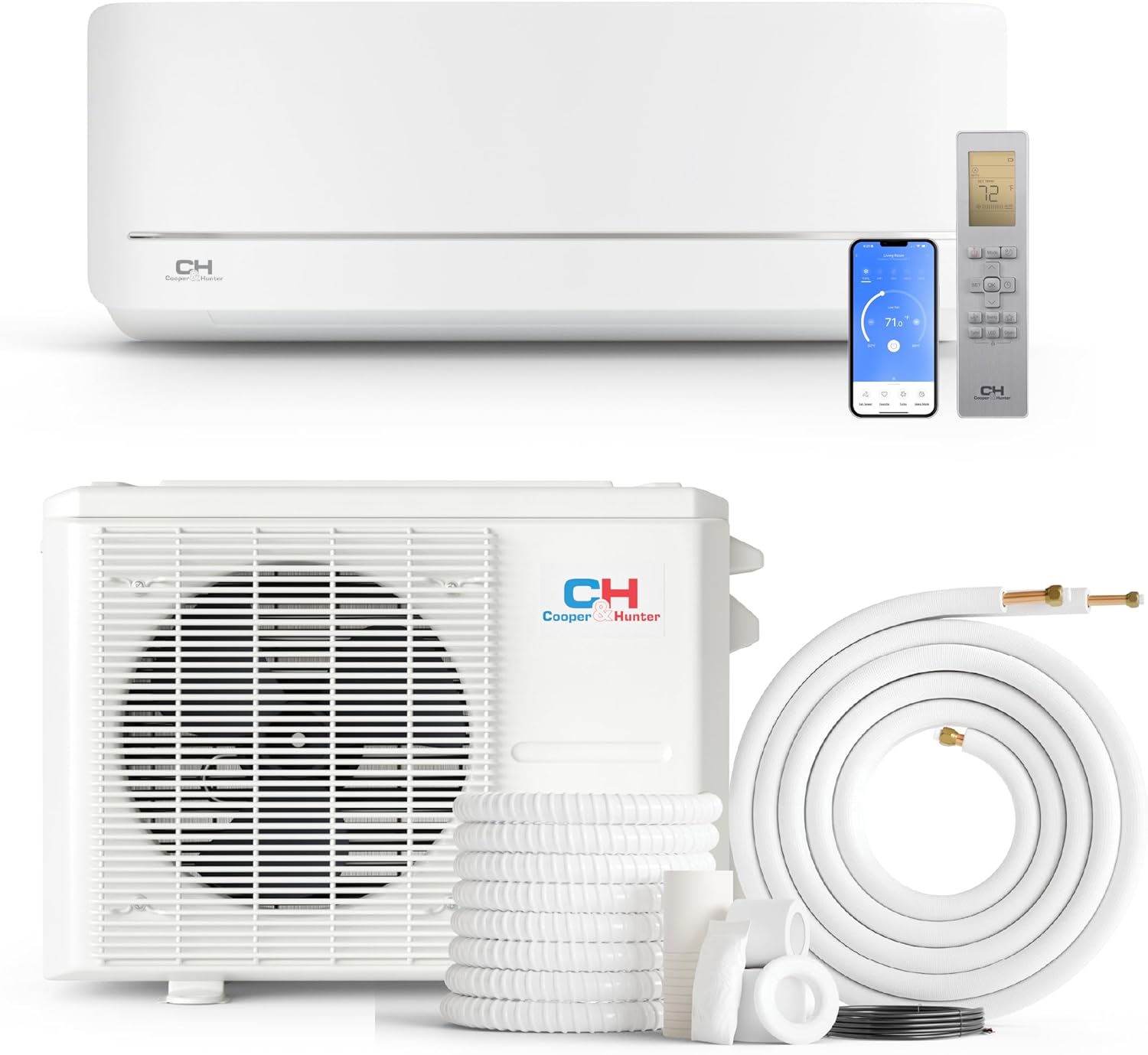 Cooper & Hunter MIA Series 12K BTU Mini Split AC |
8.3/10 | $759.97 | Buy |
| Also Great |
DELLA Optima 9000 BTU Mini Split with Hyper Heat
|
8.3/10 | $879.96 | Buy |
Rellytech ESW-001 11500 BTU Ductless Mini Split
This ductless mini-split system consolidates heating, cooling, and dehumidifying into a single unit for spaces up to 550 square feet. It's designed for quiet, efficient operation and includes features like self-cleaning and smart temperature sensing.
Pros
- All-in-one climate control for heating and cooling
- Operates quietly at 29 dB
- Includes self-cleaning function and easy-to-clean filter
- Energy-efficient 17 SEER2 inverter technology
- 4D airflow and iFEEL remote sensing for balanced temperatures
Cons
- Requires professional hardwired installation
- Only a one-year manufacturer warranty
ROVSUN AC-W-9K Mini-Split Air Conditioner/Heat
This 9000 BTU mini-split system offers both cooling and heating for spaces up to 400 sq ft. It stands out for its high 20 SEER2 efficiency rating, which promises lower energy bills, and includes an inverter for quieter, more consistent operation. The included DIY installation kit makes it a candidate for handy homeowners.
Pros
- High 20 SEER2 energy efficiency rating for lower operating costs
- Functions as both a cooling and heating (heat pump) unit
- Includes a comprehensive DIY installation kit
- Inverter technology for quieter operation and more consistent temperature control
- Remote control offers multiple modes like Turbo, Sleep, and Timer
Cons
- Requires professional installation for optimal performance and warranty
- Limited to 115V electrical systems, which may not suit all homes
- One-year warranty is relatively short for a major appliance
ROVSUN RV12T1/20 Mini-Split AC/Heater
This 12,000 BTU mini-split offers year-round climate control for spaces up to 550 sq. ft., combining cooling, heating, and dehumidification. Its high 20 SEER rating and inverter technology promise significant energy savings, while smart app and voice controls add modern convenience.
Pros
- Powerful 12,000 BTU capacity suitable for cooling and heating
- High 20 SEER efficiency rating with inverter for energy savings
- Ultra-quiet 28 dB operation in mute mode
- Smart features including app and voice control (Alexa/Google Assistant)
- Includes heat pump and dehumidification modes
Cons
- Professional installation by a licensed HVAC technician is strongly recommended
- Installation requires careful timing as components arrive in separate boxes
- Limited one-year warranty
ROVSUN 17K BTU Wi-Fi Mini Split AC/Heat Pump
This inverter-driven mini-split system offers all-season heating and cooling with high efficiency. Its 17 SEER2 rating and Wi-Fi/voice control provide modern convenience, while a 32 dBa low-speed operation keeps it quiet. It's a solid choice for residential spaces seeking an integrated climate solution.
Pros
- High-efficiency 17 SEER2 inverter promises energy savings
- Comprehensive all-season functionality with heating, cooling, dehumidifying, and fan modes
- Flexible control via remote, mobile app, and voice assistants (Alexa/Google)
- Very quiet operation at 32 dBa on low speed
- Includes practical features like a 24-hour timer, sleep mode, and ECO mode
Cons
- Requires professional installation with a new outdoor unit
- Standard one-year warranty is relatively short for this category
Della Vario TL-12K1VB 12K BTU Mini Split
This 20.5 SEER2 mini split offers efficient heating and cooling for spaces up to 550 sq ft, operating effectively even in cold temperatures down to -4°F. Its DC inverter and smart features like 4D airflow and a remote temperature sensor aim for personalized comfort and energy savings. Professional installation is required, making it a consideration for those planning a permanent upgrade.
Pros
- High 20.5 SEER2 efficiency rating for energy savings
- Functions as both a heater and cooler, effective in temperatures as low as -4°F
- Includes a comprehensive installation kit
- Features smart modes like I-Feel and 4D airflow for comfort control
Cons
- Requires professional installation and is not a DIY project
- The system mandates a new outdoor unit
Senville LETO 12000 BTU Mini Split Heat Pump
This versatile mini-split system provides quiet, year-round climate control for medium-sized rooms. Its Alexa compatibility and included installation kit offer modern convenience, though professional setup is required.
Pros
- Four-in-one functionality (AC, heat pump, dehumidifier, fan)
- Compatible with Alexa for voice and app control
- Includes a comprehensive installation kit with a 16-foot line set
- Runs quietly at 17.5 dB
- Backed by a substantial 5-year compressor warranty
Cons
- Requires professional installation, adding to upfront cost
- Heating function is only effective down to 5°F (-15°C), limiting use in extreme cold
Cooper & Hunter MIA Series 12K BTU Mini Split AC
This ductless mini-split offers both cooling and efficient heating, making it a versatile year-round solution for rooms up to 550 sq ft. Its 21.2 SEER2 rating and included smart kit appeal to energy-conscious users seeking modern control. The comprehensive installation package is a plus, though professional setup is mandatory.
Pros
- High energy efficiency with a 21.2 SEER2 rating
- Provides both cooling and heating for year-round use
- Includes a smart kit for remote app and schedule control
- Comes with a long 16-foot line set and installation accessories
- Runs quietly at 26 dB
Cons
- Requires professional installation, not a DIY project
- Freight shipping means delivery only to an accessible point outside the home
DELLA Optima 9000 BTU Mini Split with Hyper Heat
This DELLA mini split is a year-round climate solution for spaces up to 400 sq.ft, combining quiet, efficient cooling with robust heating that functions in extreme cold down to -13°F. Its soft airflow and smart app integration make it suitable for bedrooms and home offices.
Pros
- Excellent 23 SEER2 energy efficiency rating
- Powerful heat pump operates effectively in temperatures as low as -13°F
- Soft, indirect airflow design enhances comfort for sleeping and long-term use
- Smart controls via Alexa and the Della+ app with remote temperature sensing
- Includes a comprehensive installation kit for easier setup
Cons
- Requires professional installation (vacuuming and specific electrical work needed)
- Limited to 400 sq.ft coverage area
Mini Splits With Heat Pumps for Cold Winters Buying Guide
Cold-weather performance is never one number. It is the combination of how much capacity a unit keeps at low ambient temperatures, how gracefully it manages defrost, and how efficiently it moves that heat indoors.
The criteria below are the ones that separate a system built for a hard January from one that only looks convincing in a brochure.
Low-Temperature Heating Capacity
Every heat pump loses capacity as outdoor air gets colder. The question is how much. A 12,000 BTU unit rated at 47°F may deliver only 60 to 70 percent of that at 5°F, and less below zero.
Manufacturers publish these figures in extended performance tables, and the minimum operating temperature on the box tells you where the compressor stops, not where the heat output is still useful.
Standard cold-climate models such as the DELLA Vario Series are rated to roughly -4°F, while hyper heat designs push to -13°F. That gap matters for anyone in a hard-freeze climate.
Read the capacity table at 47°F, 17°F, 5°F and, where published, -13°F, then compare those numbers to your calculated load instead of the nominal BTU in the model name.
Matching BTU to Room Size and Load
A 9,000 BTU unit suits a well-insulated bedroom of roughly 350 to 450 square feet. A 12,000 BTU model covers about 450 to 600 square feet, and 17,000 BTU handles an open living area closer to 700 to 900 square feet in a moderate climate.
In a cold climate, size to the derated heating capacity, never to the sticker number.
Oversizing is as harmful as undersizing. A unit that is too large reaches setpoint quickly and short cycles, which hurts humidity control in summer and efficiency in winter.
A room-by-room load calculation that accounts for insulation, window area, ceiling height and air sealing is far more accurate than a square footage rule of thumb.
Off-grid cabins and van conversions run on DC power, which is a separate problem covered in our notes on 12V air conditioners for vanlife. For a house, stay with a standard 115V or 230V split and have the circuit sized by an electrician.
Reading SEER2 and HSPF2 Ratings
SEER2 measures cooling efficiency and HSPF2 measures heating efficiency. Both were revised upward in recent standards, so figures from older listings are not directly comparable.
In the northern United States, the federal minimum sits near 14.3 SEER2 and 7.5 HSPF2; anything at 17 SEER2 and 9 HSPF2 or above is a genuinely efficient machine.
For a cold-climate buyer, HSPF2 matters more than SEER2, because heating is where the money goes. Inverter compressors, electronic expansion valves and larger coils all improve the real-world number.
A unit carrying a cold-climate certification has been rated at 5°F rather than only at the standard 47°F and 17°F evaluation points, which is the data you want when January arrives.
Efficiency only pays back if the system is run sensibly. Setbacks that swing more than a few degrees force high-output recovery, which is exactly where savings disappear.
Where ducts are impossible and the load is small, a Dyson hot and cool air purifier can carry a single room through shoulder season, but it is not a substitute for a heat pump in deep winter.
Cold-Climate Features That Prevent Winter Problems
Defrost cycles are normal. How a unit handles them is what separates good from mediocre.
Look for demand-based defrost that runs only when frost actually builds, a base pan heater that keeps meltwater draining, and a drain line heater in areas with hard freezes.
Without those, ice can build under the outdoor cabinet and work its way into the coil.
Snow management is on you. Mount the condenser on wall brackets or a stand that keeps it above typical snow depth, and keep the top clear through the season.
A unit buried in a drift loses efficiency no matter how good its cold-weather rating looks on paper.
Low-ambient cooling matters as well if the room serves a workshop, a server closet or a year-round office. Some systems stop cooling below 5°F outdoor temperature unless they carry a low-ambient kit, so check that spec if summer is not the main event.
Noise, Airflow and Indoor Comfort
Indoor noise is measured in decibels, and 20 to 30 dB on the low setting is quiet enough for a bedroom. Above 40 dB starts to interfere with conversation and sleep.
Soft airflow modes slow the fan and redirect the louver so conditioned air does not blow straight across a bed or a desk.
Outdoor noise is the spec most buyers forget. A condenser running near a neighbor’s window will be noticed, and vibration travels through wall brackets.
Isolation pads, a ground stand instead of a wall mount where possible, and a placement away from bedroom walls all help more than a decibel rating suggests.
Air quality and comfort travel together. Dust and pet hair that recirculate through a room settle in filters and coils, so robot vacuums running a few times a week and a large-room air purifier both take pressure off the system.
Households that avoid chemical cleaners often keep steam cleaners on hand for the same reason: less residue in the air and on the coil.
Installation, Warranty and Long-Term Costs
None of these systems is a serious do-it-yourself project. Installation involves refrigerant lines, vacuuming the line set, torqueing flare fittings and a dedicated electrical circuit.
Many manufacturers require a licensed HVAC technician for the warranty to remain valid, and the registration paperwork usually asks for the installer’s license number.
Budget for the extras: line set covers, a surge protector, a bracket or stand, and in cold climates a base pan heater if it is not built in.
A poorly installed unit loses far more efficiency than the gap between two similar models, so the quality of the installer matters as much as the badge on the condenser.
Maintenance is modest. Rinse or replace the indoor filter every few weeks during heating season, keep the outdoor coil clear of leaves and snow, and have the refrigerant charge checked every few years.
A clogged filter is the most common reason a good system starts to feel weak.
Why You Should Trust Us
AirpurifierTop Review is an independent editorial site. We do not sell HVAC equipment, and we do not handle orders, returns or warranty claims.
Every model in this guide was evaluated against the same set of criteria, then scored on our APT Score, a 0 to 10 scale that weighs low-temperature heating performance, efficiency, capacity fit, noise, features and warranty support.
We do not conduct our own product trials; our evaluations are grounded in research, published data, expert review consensus, and verified buyer feedback.
Scores are revisited through 2026 whenever a manufacturer changes specifications or a pattern of verified buyer feedback changes the picture.
When a purchase made through a link on this page earns us a commission, it does not affect the criteria, the weighting or the order of the list.
Products with thin cold-weather data get marked down even when their marketing is polished, and models that look unglamorous but publish honest low-ambient tables tend to move up.
Final Thoughts
There is no single winner for every house, because the right answer depends on how cold your winters actually get and how much space one indoor head has to carry. These are the models that earned a place on the list.
- Best Overall: Senville LETO Mini Split Air Conditioner carries the highest APT Score in the group and the broadest balance of virtues: dependable heat pump operation down to 5°F, app and voice control, and a noise profile that suits a bedroom.
- Best for Extreme Cold: DELLA Optima 9000 BTU Mini Split AC, Soft Airflow is the specialist pick, rated for hyper heat operation down to -13°F with soft airflow that keeps heat from blasting across a seating area.
- Best Budget Pick: 11500 BTU Mini Split AC/Heating System 17 SEER2 asks the least of any model here while still covering a mid-size room quietly and efficiently, which is why it scores near the top despite the plain branding.
- Best for Small Bedrooms: ROVSUN 9000 BTU Mini Split AC/Heating System is compact, inverter driven and easy to live with in a room where the indoor head sits close to the bed.
- Best for Larger Rooms: ROVSUN 17000 BTU Mini Split AC and Heater moves up to the 230V class and gives open-plan living areas the capacity headroom the smaller units cannot provide.
If your winter lows stay above zero, the mid-range picks are more than enough. If they do not, pay for the low-ambient rating and the base pan heater, and put the savings into a better installation.
Frequently Asked Questions
What should I look for in mini splits with heat pumps for cold winters?
Start with the low-ambient heating rating and the published capacity at 5°F, not the nominal BTU.
A unit that keeps most of its rated output at 5°F, with an HSPF2 above 9 and a base pan heater, will outperform a larger model that derates sharply.
Defrost logic and drain line protection matter as much as the headline number.
Do mini split heat pumps really work below freezing?
Yes, and many work well below it. Standard cold-climate models such as the DELLA Vario Series are rated to about -4°F, and hyper heat designs reach -13°F.
Output does fall as outdoor air gets colder, so size the system to its derated capacity rather than the sticker.
What size mini split do I need for a bedroom?
A 9,000 BTU unit fits most bedrooms between 350 and 450 square feet. Move up to 12,000 BTU for a larger primary bedroom or a room with weak insulation and big west-facing glass. Oversizing causes short cycling, which wastes energy and leaves the room feeling uneven.
Can I install a mini split myself?
No. The job involves refrigerant lines, a vacuum pump, flare torque specifications and a dedicated circuit, and most manufacturers require a licensed technician for warranty coverage. A flawed install costs more to correct than it ever saves.
How quiet is a mini split at night?
Indoor heads typically run between 20 and 30 dB on the lowest fan setting, quieter than a whisper in most rooms.
Outdoor condensers are louder, roughly in the range of a normal conversation, so placement near a neighbor’s window is worth planning before the line set is cut.
Do I need a base pan heater in a cold climate?
If winter temperatures sit below freezing for long stretches, yes. The heater stops meltwater from refreezing inside the outdoor cabinet during defrost, which protects the drain path and the coil.
Some models build it in, others sell it as an accessory, so confirm before the installer arrives.
About the author
Contributor, Smart Home & Appliance Tech. Amara covers smart features in home appliances, including app control, sensors, voice assistants and automation, and notes when a feature adds real value and when it is a gimmick.