The 9 Best Dehumidifiers For Indoor Grow Tents of 2026
Controlling humidity is critical for a healthy indoor grow tent environment. Our 2026 roundup evaluates top-performing dehumidifiers to maintain ideal conditions for your plants.
 By Daniel Cho
Updated November 12, 2026
Managing humidity is a constant battle for indoor growers. Excess moisture can lead to mold, mildew, and stunted plant growth, jeopardizing your entire harvest. The right dehumidifier is crucial, but with so many options, choosing one that fits your tent size, offers precise control, and doesn’t add disruptive heat or noise can be overwhelming. Your key decisions will revolve around capacity, smart compatibility, and the physical design for your specific grow space.

After comparing the latest models, we recommend the AEOCKY 5000Sq.Ft Energy Star Version 6.0 as the best overall performer for most grow tent setups due to its high-efficiency compressor and smart humidity control. For those specifically managing a small, cold-space tent, the AEOCKY 2000 Sq.Ft Rotary Desiccant Dehumidifier is an excellent choice as it operates effectively without frosting. For broader home climate solutions, our guide on the best air purifiers for allergies can help with overall air quality.
The 3 Best Dehumidifiers For Indoor Grow Tents on Our Shortlist (November 2026)
- Best for: Large, high-humidity grow tents
- Coverage: 5000 sq.ft
- Dehumidification: 74 pints/day
- Noise: 44 dB

- Best for: Precision VPD and climate control
- Drying Levels: 10
- Motor: PWM rotary
- Climate Range: All

- Best for: Cold environments and small spaces
- Type: Rotary desiccant
- Operating Temp: 34°F–95°F
- Noise: 25 dB
This post may contain affiliate links. As an Amazon Associate we earn from qualifying purchases.
Quick Comparison
| Award | Product | APT Score About LAT ScoreThe APT Score is our own rating from 0 to 10, based on performance, design and build, ease of use, and value. It reflects independent research and is never influenced by manufacturers, retailers, or affiliate commissions. Learn more › | Price | |
|---|---|---|---|---|
| Best Overall |
Aeocky LEO-Lite 74-Pint Energy Star 6.0
|
8.6/10 | $199.47 | Buy |
| Best Premium |
 VIVOSUN AeroDrain D12 Smart Dehumidifier for Grow |
8.4/10 | $224.99 | Buy |
| Best Budget |
Aeocky X1-Pro Rotary Desiccant Dehumidifier
|
8.3/10 | $109.99 | Buy |
| Top Rated |
 Frigidaire FHDD2234W1 22-Pint Wi-Fi Dehumidifier |
8.0/10 | $199.00 | Buy |
| Best Value |
 MARS HYDRO MH-Dehumidifier 38-Pint for Grow Tents |
7.8/10 | $209.99 | Buy |
| Most Popular |
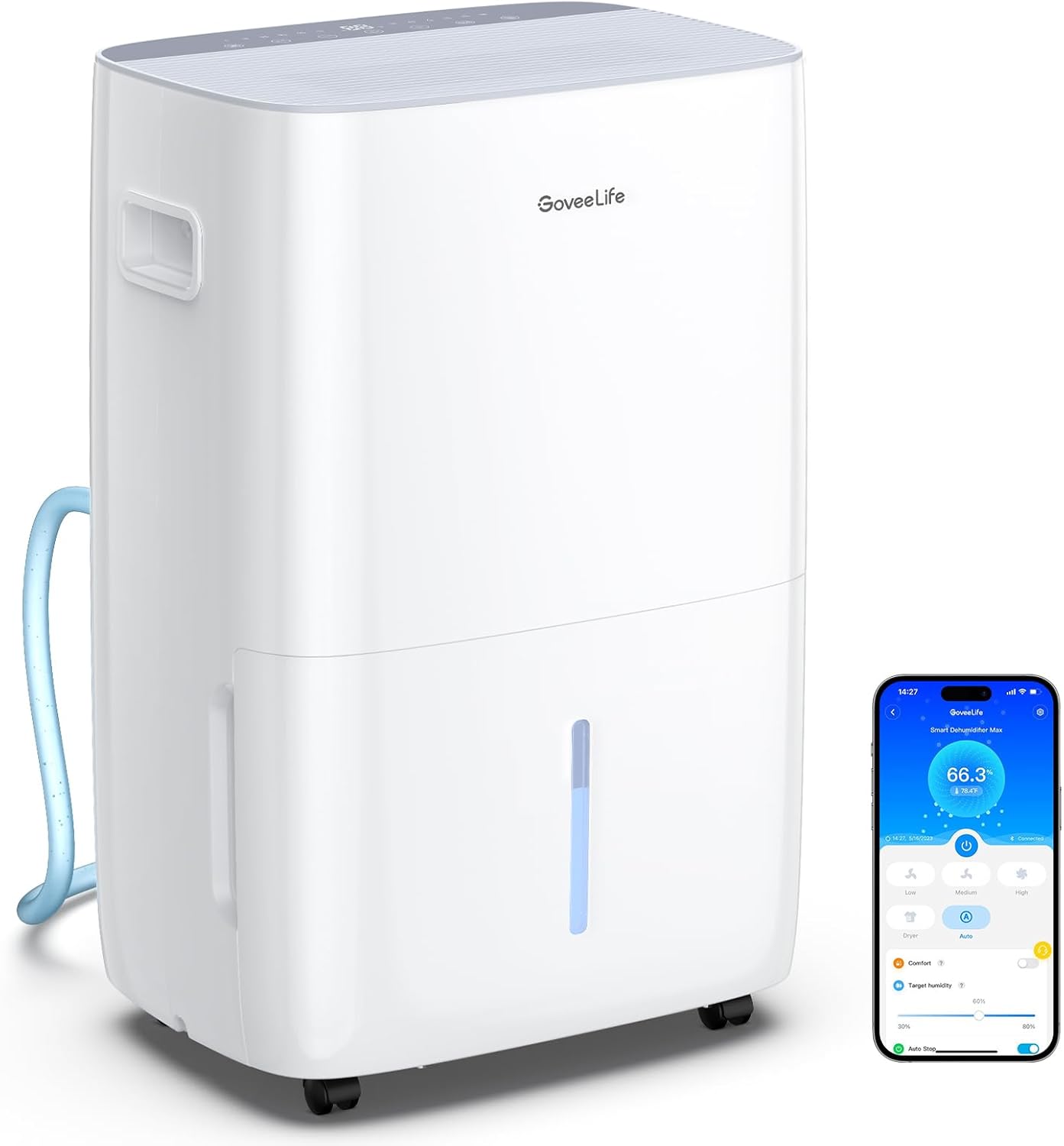 GoveeLife H7151 Smart Dehumidifier, 50 Pints |
7.8/10 | $299.99 | Buy |
| Also Great |
 AC Infinity HYDRONE 5 10-Level Dehumidifier |
7.6/10 | $139.00 | Buy |
| Also Great |
 Spider Farmer SF-Dehumidifier-US 32-Pint |
7.6/10 | $199.99 | Buy |
| Also Great |
AC Infinity HYDRONE 7 2L Plant Dehumidifier
|
7.6/10 | $259.00 | Buy |
Aeocky LEO-Lite 74-Pint Energy Star 6.0
This high-capacity dehumidifier is built on a flagship platform and is certified to the latest Energy Star Version 6.0 standard, promising significant energy savings. It's engineered for large spaces up to 5000 sq.ft, featuring a smart humidity control system and a quiet, proprietary compressor. Based on its specifications and verified market position, it's a strong contender for anyone prioritizing efficiency and long-term performance in a basement or whole-home unit.
Pros
- Certified Energy Star Version 6.0, with claims of up to 50% higher efficiency than non-certified models.
- High 74-pint daily capacity suitable for large areas like basements and whole homes.
- Features smart humidity control with a power-off memory function and an auto-defrost system for cooler environments.
- Promotes quiet operation, with a low speed of 44dB, and uses a durable copper tube construction backed by a 3-year warranty.
- Includes a drain hose for continuous drainage and is compatible with smart sockets for home automation.
Cons
- With dimensions of 14.4"D x 8.6"W x 23.3"H and a weight of 31 lbs, it is a relatively large and heavy unit.
- Operates on a single fan speed, which may limit fine-tuned control over airflow noise levels.
VIVOSUN AeroDrain D12 Smart Dehumidifier for Grow
This smart dehumidifier is designed for controlled grow environments, capable of removing up to 12 liters of moisture per day. It integrates with the Vivosun app and smart grow system for remote monitoring and automation. The tool-free setup and built-in wheels make it a versatile choice for managing humidity in tents up to 5x5 feet.
Pros
- High daily moisture removal capacity of 12 liters
- Smart app control and integration with Vivosun's ecosystem
- Easy mobility with built-in handles and caster wheels
- Automatic operation with overflow protection and auto-restart
- Two drainage options for flexible setup
Cons
- Performance can vary based on ambient temperature and tent size
- Plastic construction may not feel as durable as metal alternatives
Aeocky X1-Pro Rotary Desiccant Dehumidifier
This compact dehumidifier uses advanced rotary desiccant technology, making it a strong candidate for cold, small spaces where traditional units often fail. It's designed to operate quietly and efficiently from 34°F to 95°F.
Pros
- Effective in cold temperatures down to 34°F without icing
- Compact, portable design weighing under 9 pounds
- Quiet operation, with a sleep mode as low as 25 dB
- Includes continuous drainage hose and large 85-ounce tank
- Features smart humidity control and a 24-hour timer
Cons
- Designed for small spaces and basements, not large areas
- Produces noticeable warmth and a slight scent during initial use
- Collected water may freeze and affect use below 34°F
Frigidaire FHDD2234W1 22-Pint Wi-Fi Dehumidifier
This Energy Star-certified dehumidifier is designed for small to medium rooms, offering convenient Wi-Fi and smart home control for remote humidity management. Its compact design with casters makes it easy to move, and it operates quietly at 43 dBA.
Pros
- Wi-Fi and smart home integration via app, Alexa, or Google Home
- Energy Star certified for lower energy consumption
- Convenient continuous drain option and easy-carry bucket
- Customizable humidity control and automatic shut-off
- Quiet operation and easy to move with built-in wheels
Cons
- Designed for mild to moderate humidity levels, not extreme conditions
MARS HYDRO MH-Dehumidifier 38-Pint for Grow Tents
This dehumidifier is specifically engineered for grow tent environments. Its external air duct design minimizes heat introduction, while smart auto-humidity control maintains the ideal climate for plant growth.
Pros
- Unique air duct allows placement outside the tent to avoid adding heat.
- Smart auto mode maintains a set humidity level between 30% and 90% for hands-free operation.
- High daily capacity (38 pints) suitable for residential and grow tent use.
- Easy maintenance with a washable filter and a full-tank auto-shutoff.
- Portable with integrated handles and caster wheels for flexible positioning.
Cons
- At 29.3 pounds, it is relatively heavy for its size.
- The 2.1-liter water tank may require frequent emptying under heavy use.
GoveeLife H7151 Smart Dehumidifier, 50 Pints
This smart dehumidifier offers extensive coverage and modern convenience. It's designed for large spaces up to 4,500 sq ft and features app, voice, and touch controls, making it a strong choice for tech-savvy homeowners managing damp basements or garages.
Pros
- Smart home integration with app, Alexa, and Google Assistant support
- High-capacity dehumidification suitable for large areas up to 4,500 sq ft
- Includes continuous drainage option and a 2-gallon tank
- Features automatic humidity control and defrost function
Cons
- Operates at 850 watts, which may be a consideration for energy use
- Emits noticeable heat during high-speed operation
AC Infinity HYDRONE 5 10-Level Dehumidifier
For small grow tents, AC Infinity HYDRONE 5 centers on precise humidity control rather than broad coverage. Its PWM rotary motor offers 10 drying levels, and the unit is designed for hot and extremely cold environments. Duct ports and smart controller compatibility make it suitable for growers who want automated moisture management for 2 to 3 plants.
Pros
- 10 drying levels with PWM-controlled rotary motor for precise moisture control
- Works in hot and extremely cold environments and can reach low RH levels
- Exhaust and optional intake ports support ducting or closed-loop setups
- Compatible with smart controllers for WiFi, VPD automations, data charts, and alerts
Cons
- Rated for only 16 square feet, so larger grow spaces may need multiple units
- 2 liters per day capacity is modest for high-moisture grow setups
- 3.9 out of 5 average from 173 reviews suggests mixed customer satisfaction
Spider Farmer SF-Dehumidifier-US 32-Pint
Designed specifically for grow tents, this dehumidifier can be placed outside the enclosure to manage humidity without adding heat. It offers a high moisture removal capacity, a remote sensor for monitoring, and an energy-saving timer.
Pros
- Unique ducted design allows placement outside the tent to prevent heat addition
- High-capacity 32-pint daily moisture removal suitable for spaces up to 2000 sq ft
- Includes a remote humidity sensor probe for monitoring conditions inside the tent
- Features a 24-hour timer and auto-defrost function for efficiency and longevity
- Offers both a tank and continuous drain option for flexible water removal
Cons
- Moderate user rating of 3.9 stars suggests some users may have encountered issues
- Relatively compact 2.1-liter water tank may require frequent emptying if not using the drain hose
AC Infinity HYDRONE 7 2L Plant Dehumidifier
Built for 4 to 6 plant grow tents, AC Infinity HYDRONE 7 combines a 2 liter tank with adjustable humidity and VPD controls. Its PWM motor gives 10 drying levels and an exhaust port for ducting dry air, suiting growers who want precise moisture regulation.
Pros
- Self-regulates humidity and VPD for 4 to 6 plant grow tents.
- PWM motor provides 10 drying levels with instant on and off response.
- Works in hot and extremely cold environments and can reach low RH levels.
- Exhaust port allows ducting dry air into a tent, and optional intake supports closed-loop setup.
Cons
- 2 liter capacity may require frequent emptying unless the included drain hose is used.
- 64 square foot floor area limits it to small grow spaces.
- 3.9 average rating suggests mixed user satisfaction.
How We Picked
Our selection for the best dehumidifiers for grow tents is based on a detailed analysis of product specifications, verified customer feedback, and brand reputation. We focused on objective criteria critical for plant health and grow room management to ensure our recommendations are practical and effective.
- Dehumidification Capacity & Coverage: We matched extraction rates (pints/day) and stated coverage areas to common grow tent sizes.
- Smart Features & Control Precision: Prioritized units with app control, precise humidity settings, and compatibility with grow room ecosystems.
- Design for Grow Tents: Looked for features like external ducting ports to exhaust dry air without adding internal heat.
- Noise Level: Considered decibel ratings to ensure the unit wouldn’t be disruptive in a home environment.
- Low-Temperature Operation: Evaluated performance in cooler conditions, crucial for basement or winter growing.
Buying Guide: Making Sense of Best Dehumidifiers For Indoor Grow Tents
Match Capacity to Your Tent Size
Choosing a dehumidifier with the right capacity is the most critical step. A unit that’s too small will run constantly without lowering humidity, while an oversized one can cycle too quickly, wasting energy. Manufacturers provide a pints-per-day extraction rate and a recommended room size. For a grow tent, you often need a unit rated for a larger area than the tent’s physical footprint because plant transpiration creates intense localized humidity. For example, the MARS HYDRO 38 Pints Plant Dehumidifier 18L/day is specifically designed for common tent sizes like 3×3 or 4×4 feet.
Prioritize Precision and Smart Control
Plants thrive within specific humidity and Vapor Pressure Deficit (VPD) ranges. Look for dehumidifiers that allow you to set a target humidity percentage, not just run on a timer. Smart models that connect to an app, like many in our list, let you monitor and adjust conditions remotely, which is invaluable for maintaining consistency. This level of control is essential for preventing issues discussed in resources like our guide on the best air purifiers for allergies and pet dander, which also highlights the importance of environmental management.
Consider Placement and Heat Output
Dehumidifiers, especially compressor-based models, generate heat as a byproduct. Placing one inside a small tent can raise temperatures enough to stress plants. Some models, like the SPIDER FARMER 32 Pints Plant Dehumidifier for Grow, solve this with a ducting port, allowing you to place the unit outside the tent and pipe dry air in. This keeps your grow space cooler. Also, consider physical size, weight, and wheels for easy positioning.
Quick Checklist
- Verify the pints-per-day capacity suits your tent size and plant count.
- Ensure the unit has a precise humidity setting (e.g., 30%-80% RH).
- Check for a continuous drain option to avoid manually emptying a tank.
- Confirm low-temperature operation if your grow space gets cool.
- Read reviews specifically from other growers for real-world performance notes.
Related reading: For other essential grow room gear, explore our review of the best whole house fans for cooling without ac.
FAQs
What is the best dehumidifiers for indoor grow tents in 2026?
Our top pick for most growers is the AEOCKY 5000Sq.Ft Energy Star Version 6.0, balancing high capacity, smart features, and energy efficiency. The “best” model ultimately depends on your specific tent size, budget, and whether you need specialized features like cold-weather operation.
How do I know what size dehumidifier I need?
Start with your grow tent’s square footage, but choose a dehumidifier rated for a larger area—often 1.5 to 2 times the tent size—to account for the intense moisture from plants. A unit rated for 2000-3000 sq. ft. is a good starting point for a 4×4 tent. For help with other sizing decisions, see our guide on the best travel humidifiers for hotel rooms.
Can I use a regular home dehumidifier in my grow tent?
You can, but models designed for grow tents often have advantages like external ducting ports and more precise humidity controls. A standard model like the Frigidaire 22-Pint Portable Dehumidifier can work for very small tents but may lack the robust extraction needed for flowering plants.
How important are smart features?
Very important for serious growers. App control allows you to monitor and adjust humidity remotely, set schedules, and receive alerts. This helps maintain ideal VPD levels consistently, which is key for plant health and yield. The GoveeLife Dehumidifier for Home 4,500ft² offers extensive smart home integration.
Do I need a special dehumidifier for a cold basement?
Yes. Standard compressor dehumidifiers can frost over and shut down in cooler temperatures (below 65°F). For cold spaces, look for a model with an auto-defrost function or, better yet, a rotary desiccant dehumidifier which operates efficiently in temperatures as low as 34°F.
What maintenance is required?
Regularly clean the air filter to maintain efficiency. If using the internal tank, empty it frequently. For continuous drainage, ensure the hose is clear and directed properly. Keeping your air clean also helps; consider pairing it with a device from our list of the best air purifiers for smells.
Final Thoughts
Selecting the right dehumidifier is a key investment in your indoor garden’s success. For growers managing large, humid tents, the AEOCKY 5000Sq.Ft model provides the power and efficiency needed for consistent control. If your priority is scientific-level precision over VPD and climate automation, the AC Infinity HYDRONE 7 is built for that task. And for those battling humidity in a cool basement or a compact tent, the AEOCKY 2000 Sq.Ft Rotary Desiccant Dehumidifier offers a frost-free, quiet solution. Remember, clean water is also vital; for your home’s supply, check out our recommendations for the best faucet water filters. Once your new dehumidifier arrives, place it on a level surface, set up continuous drainage if possible, and allow it a full cycle to stabilize humidity readings in your tent before making further adjustments.
About the author
Editor, Robot & Cordless Vacuums. Daniel covers robot vacuums and cordless stick vacuums. He compares suction ratings, battery run time, dust bin size, navigation features and the cost of replacement parts.